
Inside a Failed Shipment: What Really Goes Wrong in Chemical & Bulk Liquid Exports
The majority of the failed exported shipments do not crumble due to a single sensational error. They die without commotion–in little things overlooked, which add with time, and make it more. To exporters dealing with chemicals and bulk liquids in India and the USA, it is vital to learn such patterns of failure to avoid recurrent disruptions thereof.
This blog splits down the usually occurring mistakes in a failed shipment and more crucially how the exporters can prevent the same errors.
Where Do Export Shipments Go Wrong?
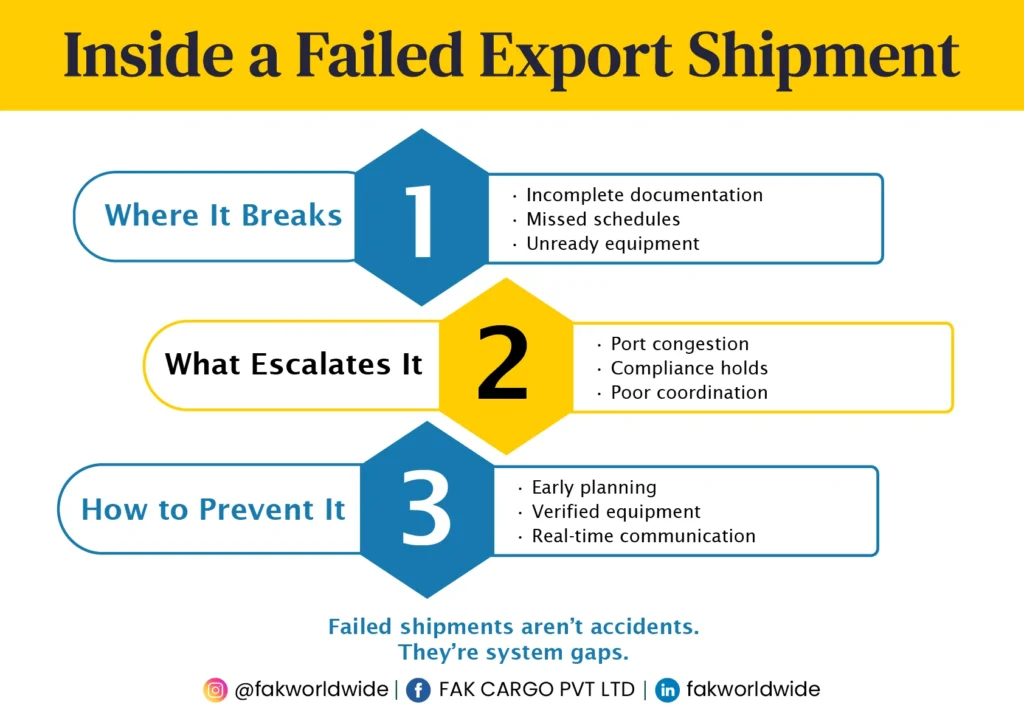
The failures usually start even before the cargo is transferred onto the port. Unrealistic schedules, incomplete documentation or poor equipment planning precondition disruption.
The exporters who depend on the services of sea freights often undervalue the extent to which the port activities are synchronized. Even a small inconvenience in the inland transport or documentation can cause cargo to be late enough to roll over and to be rescheduled.
In the case of chemical exporters, the safety and compliance factor leaves them with even less room to be wrong.
What Is the Process of Documentation Error Growing into Significant Delays?
Poor or wrong documentation is among the most prevalent reasons of shipment failure. Mistakes in the dangerous goods declaration, safety data sheets or consignee details have the power to stop the cargo immediately.
After a shipment has been flagged, it can be revalidated or reinspected or cleared by the regulatory agency – days or weeks to transit. To exporters who use ocean freight forwarding services, these delays are probably to cause vessel miss connections and sunken costs.
Problems in documentation are not isolated. They also tend to cause secondary checks that further increase delays.
Why is it that Equipment Planning is such a Failure?
One risk factor is silent, that is equipment availability. Exporters tend to believe that readiness = availability of tanks or containers, but it is not always the case.
In the case of iso tank containers, preparation is based on cleaning certificates, cleaning schedules, and compliance certificates. The exporters who have to deal with the iso tank operators in India are occasionally subject to unexpected setbacks at the last minute, whereby a tank has failed its check, or is not available as a result of a previous delay.
The absence of alternatives for finding reliable ISO tank depot services enhances the chances of such failures.
What are the Effects of Port Level Problems in Enhancing Shipment Failures?
Ports are stressful places where minor problems grow very fast. Even well-planned shipments can be disrupted by congestion, labour shortages or unplanned audits.
The exporters who lack strong port agency services are likely to be unable to rectify their problems once they land in the port. Even small delays will escalate unless there is live coordination, to the point of lost sailings and lost time.
Compliance and safety measures are enforced in both the Indian and the US ports through 2025-26.

What is the Effect of Communication Failure on Failed Shipments?
A typical failure point is communication failures between exporters and forwarders, between carriers and depots. The delaying or inadequacies of updates also lead to making decisions too late to cause disruption.
This is especially dangerous when dealing with exporters with supply chain management of the ISO tanks where there should be synchronization of time between various stakeholders. Real-time visibility and clear channels of escalation mean a lot to minimise the risk of failure.
How Can Exporters Avoid shipment failures in 2026?
The first stage of prevention is real planning. The exporters are required to coordinate the documentation, equipment preparedness, inland transport and ports far before the shipments are due.
The existence of logistics partners that have local port and equipment cycle intelligence will be a robust safety net. Internal audits and post shipment reviews should also be conducted on a regular basis allowing weak spots to be identified prior to their repeat occurrence. Planning is less expensive than responding to an incident (in terms of costs).
In conclusion: The Failed Shipments Are Systems Failure Not Accidents
The majority of the failed shipments are not accidents. They are a product of systems, which are not visible, not coordinated, or buffered in time.
Exporters capable of making structured plans, find good associates and adhering to discipline of compliance significantly minimize possibilities of failure. Prevention is the most cost-effective approach in an ever-changing and complicated logistics environment.
Keep up with us, get real world logistics updates, industry knowledge, and smarter shipping solutions on Instagram, LinkedIn, and Facebook..
Related posts
Port Cut-Off Times Explained: How Missing One Hour Can Delay Your Shipment by a Week
Delays in global logistics are hardly initiated by a crisis. They begin much sim