

The Critical Role of Driver Training in Hazmat Road Transport Safety.
The driver is the role which is absolutely central in transportation of dangerous goods by road. The quality of driver training is what determines the performance, safety and regulatory efficacy of your logistics chain, and even your brand image, whether loading chemicals, gases and other potentially harmful cargo.
In trans-border logistics between the USA and India, in particular the transportation of iso tank containers or chemical goods with high specificity, improved competence of the driver is not a luxury but a strategic requirement. Poorly handled deliveries may lead to huge fines, environmental contamination, supply chain disruption, as well as reputational losses.
The federal law of PHMSA (49 CFR) in the U.S. requires hazmat driver training in the 90 days of employment and refresher training after every three years of employment. In India, the driver training programs in dangerous goods transportation are monitored by the Indian Chemical Council (ICC), and so on.
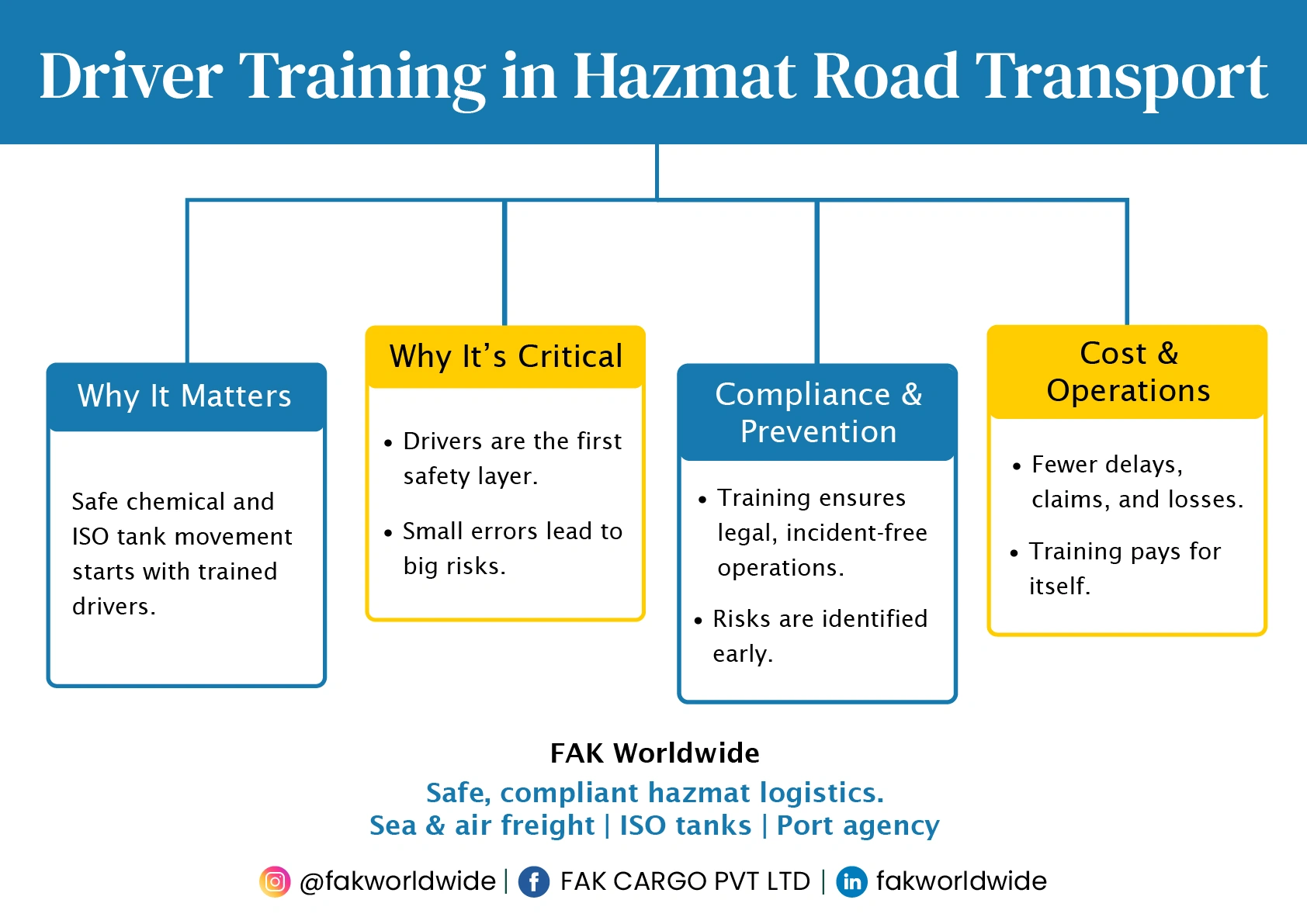
This paper will discuss three reasons why hazmat road transport safety needs to start with a solid driver training — Compliance and Regulation, Operational Excellence and Incident Prevention, and Cost and Brand Protection.
Compliance & Regulation – Saving Money on Fines and Time
The first and the most tangible advantage of driver training is compliance. The U.S. hazmat laws require the operators of the vehicles to be trained on general awareness, the functions specific to the duties, safety, and security awareness. Failure to do so may lead to fines in tens of thousands of dollars per violation and worse still in case of injury or environmental harm.
The driver programs in India cover defensive driving, first aid, advanced handling and the knowledge of hazardous goods including container and tank specifications. To the exporters and the logistics firms that provide transportation of the iso container tank between the inland depot and ports like Nhava Sheva or Mundra, it is important to have fully credentialed drivers who guarantee the security of the whole chain of logistics.
Actionable Insight:
Have written training records of all the hazmat drivers. Check that they are conversant with load specific procedures, labeling policies and emergency response. The refresher sessions will guarantee further regulatory compliance and preparedness.
Incident Prevention and Operational Excellence
Training develops operational strength outside of compliance. Professional drivers will be more qualified to detect problems promptly, i.e. leaks, mislabeling, and damaged tank integrity, and cope with loading/unloading, fatigue, and emergency containment.
Having Indian hazardous goods driver-training programs has already shown measurable improvement in the accidents and also confidence of the drivers. This is a direct translation to reduced losses of cargo, reduced insurance claims, and unhindered operations in the roads.
Whether it is the transportation of iso tanks in Mumbai or the process of making transfers between Tank container depots in India and those in international ports, a small driver mistake can cause a major impact even in the form of downtime and regulatory inspections or the ruin of a client relationship.
Actionable Inspiration:
Tailor your driver-training program to your cargo, type of vehicle, routes, etc. Incorporate practical exercises of spills, fires and rollover response. KPIs in track safety include accident-free kilometers, accident reports and emergency response times.
Cost & Brand Protection – Energizing Training into a Business Facilitator
Admittedly, driver training demands investing in it; however, its ROI is supported by decreased incidents, penalties, and increased confidence by customers and regulators. A single accident involving hazmat would easily offset the entire annual training of a whole fleet.
To the forwarders, importers and exporters dealing with the Best logistics agents in India or in charge of the Supply chain management for ISO tanks, trained drivers translate smooth movements between the ports and depots free of demurrage. A lesser number of delays equals to cost savings in less detention, premium freight, and insurance claim.
Your brand is also safe through driver training. The safety and reliability of companies have always won long-term contracts and regulatory confidence, thereby promoting their presence in the world of the sea freight forwarding services and air freight logistics markets.
Actionable Insight:
Training as a position driver as a corporate value proposition. Give tangible results that demonstrate safety investments provide financial benefit such as the number of incidents reduced, the score on compliance audits increased and the operational costs reduced.
Summary – Before You Invest in Assets, Invest in Training
Drivers have the initial point of protection in hazmat road transport. In the case of transportation of chemicals through iso tanks in Nhava Sheva, tank container in Mumbai, or organizing intermodal logistics in India and the USA, qualified and certified drivers can turn the risk to resilience.
Driving school programs are not a luxury anymore to logistics managers and exporters, but to regulatory compliance, business sustainability, and brand loyalty.
Our competencies at FAK Worldwide include sea freight forwarding services, air cargo forwarding solutions, port agency services, bunkering services in India, and tank-container operations. We assist shippers and carriers to have their drivers trained, certified and ready to safely and efficiently deliver hazardous cargo across the routes around the world.
Stay Connected
To get information on hazmat transportation safety, logistics innovation and global freight trends, follow FAK Worldwide on Instagram, LinkedIn, and Facebook.
Related posts
How Custom Logistics Boosts India’s Export Industries
India ranks among the world’s top export economies, driven by strong sectors s

Tank Container Scheduling Conflicts: Why Availability ≠ Readiness
Exporters tend to believe that when the ISO tank is available the shipment is re

Optimizing Bulk Liquid Supply Chains: FAK Worldwide’s Data-Driven Approach
Transporting bulk liquids is among the most complex challenges in logistics. Fro