
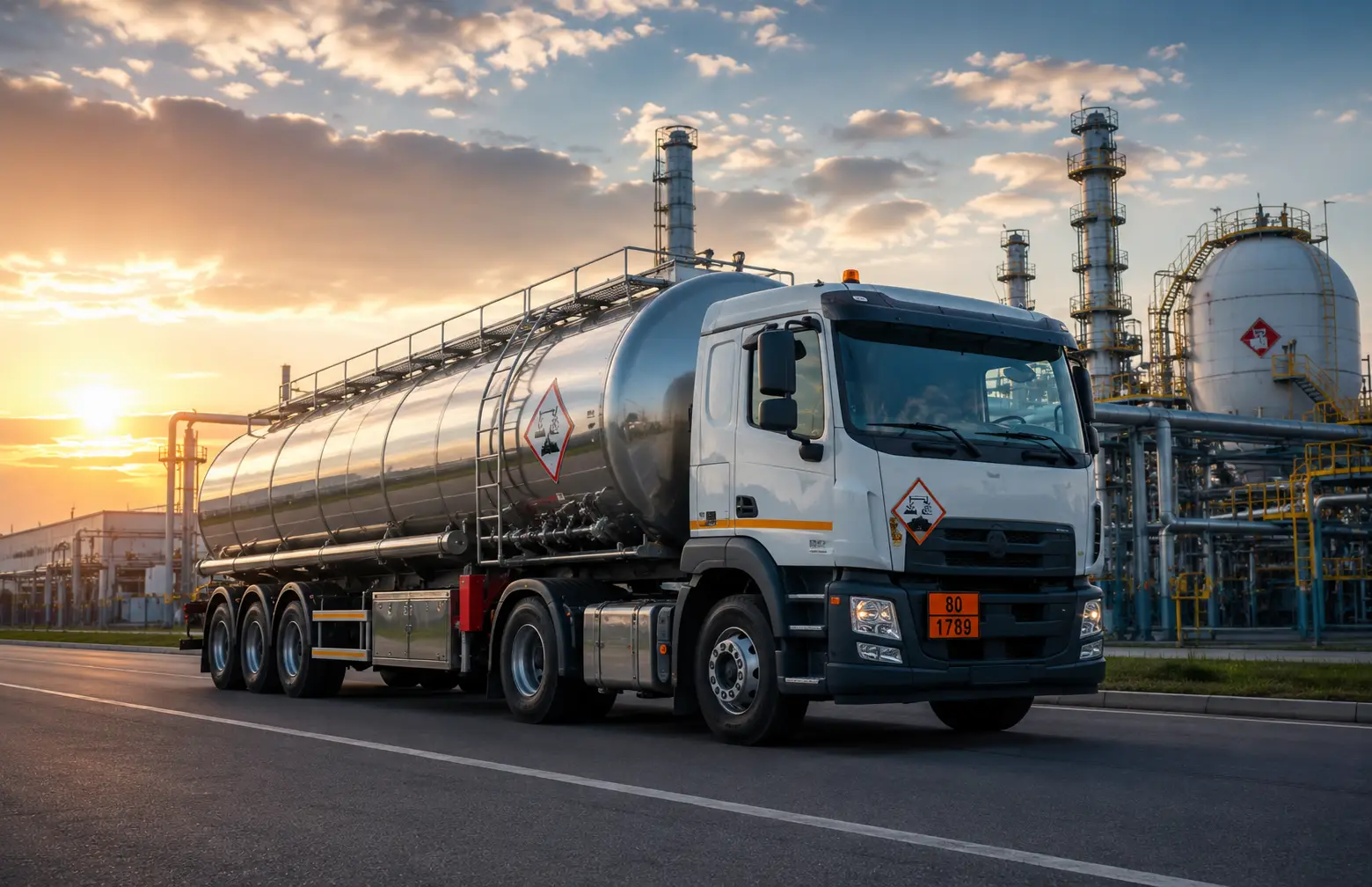
Chemical Logistics: How does it work?
India’s chemical and pharmaceutical sectors are among the country’s largest export industries, supplying products to markets worldwide. Transporting hazardous and sensitive chemical cargo safely requires specialized equipment, regulatory compliance, and experienced logistics management.
If you are seeking ISO Tank service for chemical logistic read below all the requirement & working process:
What does Chemical Logistics mean?
Chemical logistics is the special transport of hazardous liquids, chemicals, and bulk materials, in accordance with strict international safety and regulatory requirements.
It’s not just “putting chemicals in a container”. It involves:
- Ensuring the correct tank certification and inspection
- Documentation relating to dangerous goods (DG shipping papers)
- Making sure that crew training and safety procedures are followed
- Planning routes carefully to avoid sensitive areas
- Insurance policies covering transport and liability
- Air & Maritime compliance to IMDG Code (maritime) and IATA Code (air)
What is an ISO Tank Container?
An ISO tank container is a standardized stainless-steel tank designed for the safe transport of bulk liquids, hazardous chemicals, food-grade liquids, and pharmaceutical products.
Key specs:
- Volume: 20,000-24,000 liters typically
- Weight: 2,500-3,500 kg (empty)
- The single-chambered model is suitable for single chemicals while the multi-chambered one is suitable for multiple chemicals
- Certified and tested for specific commodity types
- ISO tanks require periodic inspection, testing, certification, and maintenance to comply with international transport regulations.
Why ISO Tanks Matter
ISO tanks often reduce per-unit transportation costs compared to drum shipments by improving cargo density, reducing packaging requirements, and streamlining handling operations.
ISO tanks deliver:
- 24,000 liters per shipment (very high scale efficiency)
- ₹5-15/liter freight (80% cost reduction)
- Easier system integration and loading efficiency
- Reduce the negative effects of waste (reuse containers)
Real cost comparison:
- Drums: 120 drums × 200L = 24,000L at ₹80/L = ₹19.2 lakhs
- ISO tank: 24,000L at ₹10/L = ₹2.4 lakhs
Savings: 87.5% per liter
ISO tanks minimize contamination risks, improve product integrity, and provide a safer transport environment for hazardous and sensitive cargo.
What are the types of chemicals that ISO Tanks use?
Liquid chemicals:
- Acids like sulphuric, hydrochloric and nitric acids
- There are two types of alkalis: Caustic soda and ammonia
- Organic chemicals (toluene, ethanol, glycerin)
- Polymers (resins, latex, polymer solutions)
- Oils and fats (edible oils and industrial oils)
- Pharmaceutical intermediates
Special considerations:
- Food-grade: Special tanks that have been cleaned to the food safety standard
- Non-food: Industrial chemicals, can have residue tolerance
- Multi-purpose: If compatible, some tanks are used for multiple commodities
What are the ways of transporting chemicals safely?
Tank Selection & Certification
Each chemical has an IMO/UN classification (Class 3, Class 6, Class 8, Class 9 etc.). A certificate should be awarded for that class.
Example: Sulfuric acid is a Class 8 (corrosive). Requires a tank that is made from corrosion resistant materials and coated on the inside with a special coating. Tank selection must match the chemical’s classification, compatibility requirements, and applicable transport regulations.
Pre-Shipment Inspection
The tank is treated prior to loading it with items:
- Manual testing (no cracking, corrosion, damage)
- Pressure test (tests for air-tightness of seals)
- Cleanliness certificates (if no trace of previous shipments)
- Documentation Review (Certificates of origin, material safety data sheets)
Loading & Sealing
- Chemicals are automatically dosed to the required volumes.
- Certified closures are used to seal tanks.
- A safety seal is applied (evidence of tampering found).
- Final inspection and sign off by certified inspector.
Transportation Route
- Ships travel on designated shipping lanes and avoid sensitive environmental areas.
- Emergency response equipment and spill contingency plans are kept onboard.
- The journey is monitored regularly throughout.
Unloading & Cleaning
- Cargo is unloaded at an authorized facility.
- Safety procedures are followed throughout the unloading process.
- Tanks are cleaned, inspected, and prepared for their next use.
- Inspection records are updated before redeployment.
Benefits of ISO Tank Export for Indian Chemicals
- Reduces freight cost 80-85% per litre
- Loading and unloading speed is improved (1-2 days for drums, 2-3 weeks)
- No manual handling, low contamination risk
- Reduces waste as containers are reusable
- Complies with international standards (IMDG, IATA)
ISO Tank Regulations & Compliance
Exporting chemicals requires:
- IEC (Importer-Exporter Code): All exporters are required to have IEC
- DG Shipping Certificate: Training certificate for Hazmat
- MSDS (Material Safety Data Sheet): Safety information sheet for a product
- Custom declarations: Including UN class, proper shipping name, technical name
- Insurance: Chemical cargo insurance (must have insurance for hazardous materials)
Real Export Scenario
An Indian pharmaceutical company which is exporting 24,000 liters of glycerin to Europe:
| Method | Cost | Time | Total |
| Drums (120 × 200L) | ₹19.2 L (freight) | 35 days | ₹19.2L |
| ISO Tank | ₹2.4L (freight) | 28 days | ₹2.4L |
| Savings | ₹16.8L (87.5%) | 7 days faster | ₹16.8L |
Key Takeaway
Global trade is competitive, safe and compliant only when the exporters of chemicals and pharmaceuticals from India have ISO tanks as a part of their infrastructure.
Exporting chemicals? From the initial sourcing of certified tanks, the loading, the handling of all the DG documentation, customs clearance and safe delivery of the tanks around the world, FAK Cargo takes care of all the chemical logistics.
Looking for an expert in Chemical Logistics solutions? The Fak Cargo takes care of it all, from loading, documentation, to safe delivery of tanks we handle expertly.
Connect now and let us take care of the chemical logistics requirements for your business.
Related posts
The Hidden Risks of Choosing the Cheapest Freight Forwarder for International Shipments
The container left Mumbai eighteen days ago. The customer in Rotterdam needed it

Fueling the Future: ISO Tanks and the Rise of Alternative Energy Transport
The Clean Energy Boom Needs Smarter Logistics As the world races toward cleaner,

Optimizing Inventory Management: FAK Worldwide’s Data-Driven Approach to Warehousing
Effective inventory management is a cornerstone of streamlined logistics and sup