
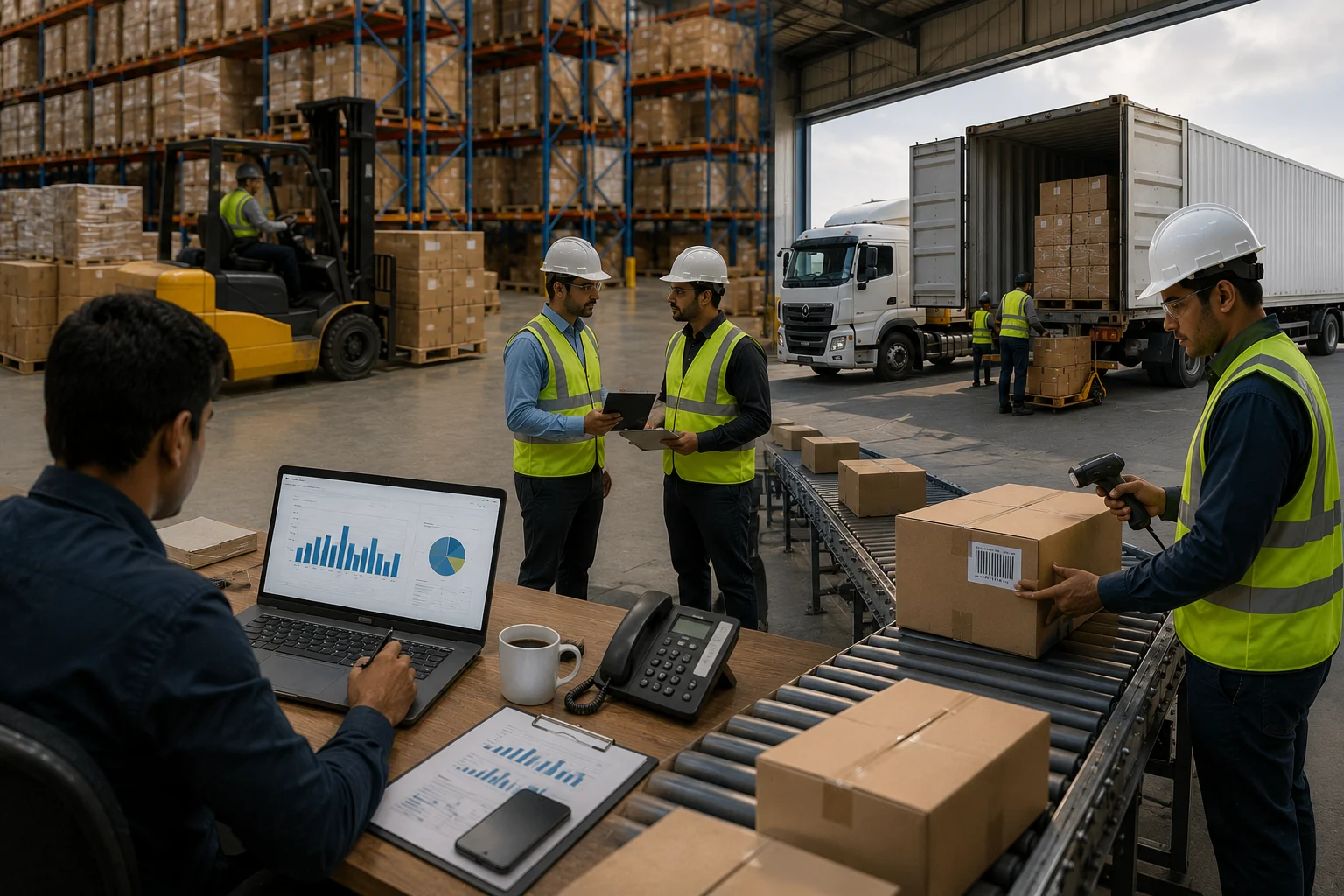
What Does a 3PL Provider Actually Do? A Complete Guide for Manufacturers
Quick Answer: A 3PL provider, or third-party logistics provider, manages selected logistics activities on behalf of another business. For manufacturers, this can include transportation, warehousing, inventory handling, freight forwarding, customs coordination, distribution and specialised cargo management. The manufacturer keeps control of its products and commercial decisions while the 3PL manages agreed parts of the physical supply chain and logistics execution.
Key Takeaways
- A 3PL can manage one logistics function or coordinate several stages of the supply chain.
- Manufacturers commonly outsource transport, warehousing, freight forwarding and distribution.
- A good 3PL should improve operational coordination, not simply add another intermediary.
- Specialised products such as chemicals, hazardous cargo and bulk liquids require additional technical capability.
- The right provider depends on cargo type, geography, shipment frequency, compliance requirements and visibility needs.
Manufacturers rarely struggle only with producing goods. The complexity often begins after production.
Raw materials must arrive when required. Finished goods need storage. Export cargo must reach ports or airports. Documentation has to match the shipment. Customers may require delivery across several Indian states or international markets.
Managing all of these functions internally can require multiple transporters, warehouses, freight forwarders, customs partners and specialist contractors.
A 3PL provider brings some or all of these logistics activities under an outsourced operating structure.
What Does a 3PL Provider Actually Do?
Third-party logistics, commonly called 3PL, means outsourcing logistics operations to an external specialist.
The exact scope varies considerably.
One manufacturer may use a 3PL only for domestic distribution. Another may require warehousing, inventory coordination, container movement, international sea freight and final delivery.
Typical 3PL logistics services can include:
- inbound transportation
- factory-to-warehouse movement
- warehousing
- inventory handling
- order dispatch
- domestic distribution
- container transport
- sea and air freight forwarding
- customs coordination
- export packing
- multimodal transport
- shipment tracking
- specialised chemical or hazardous-cargo logistics
FAK Worldwide currently describes its service portfolio as covering domestic transport and 3PL services alongside air freight, sea freight, multimodal transport, export packing and specialist chemical and ISO tank logistics.
3PL vs Freight Forwarder vs Transporter: What Is the Difference?
These terms are sometimes used interchangeably, but they describe different scopes.
| Provider | Typical Role |
| Transporter | Moves cargo between specified locations |
| Freight forwarder | Coordinates international freight, carriers, routes and shipping documentation |
| Warehouse operator | Stores and handles inventory |
| 3PL provider | Integrates multiple outsourced logistics functions |
| Lead logistics partner | May coordinate several logistics providers across a broader supply chain |
A freight forwarder can form part of a 3PL solution. Similarly, road transportation may be only one component.
For manufacturers, the distinction matters because buying a freight rate is different from outsourcing responsibility for a larger logistics process.
Which 3PL Logistics Services Matter Most to Manufacturers?
Inbound Material Movement
Manufacturing depends on reliable inbound supply.
A 3PL may coordinate movement of raw materials, components, packaging or chemicals from suppliers to manufacturing facilities.
The objective is not merely transport. Timing, equipment selection and coordination with production schedules can become equally important.
Warehousing and Inventory Handling
Warehousing allows manufacturers to separate production from immediate customer dispatch.
Depending on the agreement, a 3PL may support:
- receipt of goods
- storage
- pallet handling
- inventory movement
- picking and dispatch
- temporary export storage
FAK lists transport and warehousing among its supply-chain capabilities and identifies manufacturing and industrial businesses as one of the sectors supported through 3PL, warehousing and domestic distribution.
Domestic Distribution
Finished products may need to move from a plant or warehouse to distributors, industrial customers, ports or project sites.
A 3PL can coordinate these movements across different transport providers instead of requiring the manufacturer to manage every vehicle separately.
International Freight Forwarding
Manufacturers that export or import may require:
- FCL or LCL sea freight
- air freight
- container positioning
- port coordination
- customs support
- multimodal transport
- origin-to-destination planning
FAK is registered with DG Shipping in India as a Multimodal Transport Operator and provides international sea and air freight alongside domestic transportation.
Specialised Industrial and Chemical Logistics
Standard general-cargo processes may not be suitable for every manufacturer.
Chemicals, hazardous products, bulk liquids, temperature-sensitive goods and project cargo can require specialist equipment, trained personnel and additional documentation.
This is where broad supply chain management services and sector-specific logistics expertise need to work together.
Why Manufacturers Use a 3PL Provider
Outsourcing logistics is not automatically better than managing it internally. It becomes useful when the outsourced provider can solve a genuine operational problem.
Potential advantages include:
Fewer Operational Interfaces
Instead of coordinating separate road transporters, warehouses and freight agents, a manufacturer may work through one primary logistics partner.
Access to Specialist Capability
A business shipping chemicals occasionally may not want to build its own ISO tank, DG documentation or hazardous-cargo expertise.
Greater Geographic Reach
A manufacturer expanding exports or distribution into new regions may use a 3PL’s existing carrier and partner relationships rather than establishing everything independently.
Scalable Logistics Capacity
Shipment volumes can change with production cycles, customer demand or seasonal requirements. Outsourced logistics can provide greater flexibility than owning every truck, warehouse or material-handling asset internally.
When Should a Manufacturer Consider Outsourcing to a 3PL?
A 3PL may be worth evaluating when:
- logistics management is consuming excessive internal time
- shipment volumes have expanded across multiple locations
- international trade is becoming more complex
- several vendors are handling disconnected logistics functions
- warehouse requirements are changing
- specialist cargo requires technical expertise
- management wants clearer accountability across the transport chain
The decision should still be based on total operational value, not simply the lowest freight quote.
3PL Logistics for Indian Manufacturing Supply Chains
Indian manufacturers often need to connect inland industrial locations with major gateways.
For example, cargo from Maharashtra or Gujarat may move through Nhava Sheva, Hazira or Mundra, while manufacturers in southern India may route exports through Chennai and other regional gateways.
A 3PL structure can coordinate:
factory → inland transport → warehouse or CFS → port → international freight → destination delivery.
FAK states that it supports domestic haulage and factory-to-port movements and has operations around major Indian logistics and chemical hubs, including Nhava Sheva, Hazira and Bharuch.
For manufacturers, this type of coordination is often where 3PL becomes more valuable than isolated transport bookings.
Industry Insight: What We See When Manufacturers Approach Us
When manufacturers approach us for 3PL logistics services, we often find that the initial request is framed around freight cost.
In our experience, the bigger issue is frequently coordination.
One transporter is handling factory movement, another company is managing warehousing, a separate forwarder is booking ocean freight, and no single team has visibility over the complete journey.
We also see businesses outsource logistics before clearly defining responsibility. That creates confusion when something changes.
We generally prefer to establish the cargo profile, expected volumes, delivery points, documentation requirements, service levels and escalation process first. The more clearly responsibilities are defined at the beginning, the easier it is to manage the operation consistently.
For specialised manufacturing cargo, we also look at whether the provider actually understands the product. Chemical logistics, for example, cannot be treated exactly like conventional palletised cargo.
Common Mistakes When Choosing a 3PL
Manufacturers should avoid:
- selecting a provider only on the lowest freight rate
- outsourcing without defining service scope
- ignoring warehouse and handling capability
- overlooking dangerous-goods expertise
- failing to define reporting and shipment visibility requirements
- using one logistics model for every cargo type
- not checking geographic coverage
- leaving escalation responsibilities unclear
- evaluating transport cost without considering delays, handling and coordination
How to Choose the Right 3PL Logistics Partner
Before appointing a provider, ask:
- Which services will be managed directly?
- Which activities will use subcontractors or partner networks?
- Does the provider understand your industry and cargo?
- Can it handle domestic and international movements?
- What warehousing or material-handling support is available?
- How are shipments tracked and reported?
- Can it support hazardous, chemical or specialised cargo if required?
- Who is accountable when a shipment is disrupted?
- Can the solution scale with future volumes?
A strong 3PL relationship should have clearly defined operational responsibilities and measurable service expectations.
Why FAK Cargo
FAK Worldwide provides domestic transportation and 3PL services alongside sea freight, air freight, multimodal transport, warehousing support, export packing and specialised ISO tank and chemical logistics. The company serves manufacturers, exporters, chemical businesses and other industrial customers.
For manufacturers with mixed requirements, this allows conventional supply chain management services to be coordinated alongside specialist cargo movements where required.
Key Takeaway
A 3PL provider does more than move freight. The real value lies in coordinating multiple logistics functions so that transportation, warehousing, forwarding and specialised cargo requirements work as one supply-chain process.
If your manufacturing business is reviewing whether to outsource part or all of its logistics operations, FAK Cargo can discuss your cargo profile, routes and operational requirements to determine which 3PL functions are genuinely useful for your supply chain.
FAQs
Q1. What is a 3PL provider?
A. A 3PL provider is an external company that manages agreed logistics activities for another business. These may include transportation, warehousing, freight forwarding, distribution and specialised supply-chain operations.
Q2. What services does a 3PL logistics company offer?
A. Services can include domestic transport, warehousing, inventory handling, distribution, international freight forwarding, customs coordination, export packing and specialised cargo logistics.
Q3. How can manufacturers benefit from using a 3PL provider?
A. Manufacturers may gain access to logistics expertise, broader transport networks, flexible capacity and more coordinated supply-chain execution without managing every logistics function internally.
Q4. When should a business outsource logistics to a 3PL company?
A. Consider outsourcing when logistics complexity is increasing, internal teams are managing too many vendors, shipment volumes are expanding or specialist transport expertise is required.
Q5. How do I choose the right 3PL logistics partner?
A. Evaluate industry experience, service scope, geographic coverage, warehousing capability, freight network, specialist cargo expertise, reporting systems and clearly defined accountability, not just price.
Related posts

Landed Cost Calculation for Exporters: How to Quote International Buyers Accurately
Winning an export order is about more than offering the lowest price. Internatio
Demurrage vs Detention vs Port Storage Charges: What Indian Exporters Must Know
International shipping involves several moving parts, from factory dispatch and
How 3PL Logistics Reduces Supply Chain Costs Without Compromising Service
Quick Answer: 3PL logistics can reduce supply chain costs by consolidating shipm