
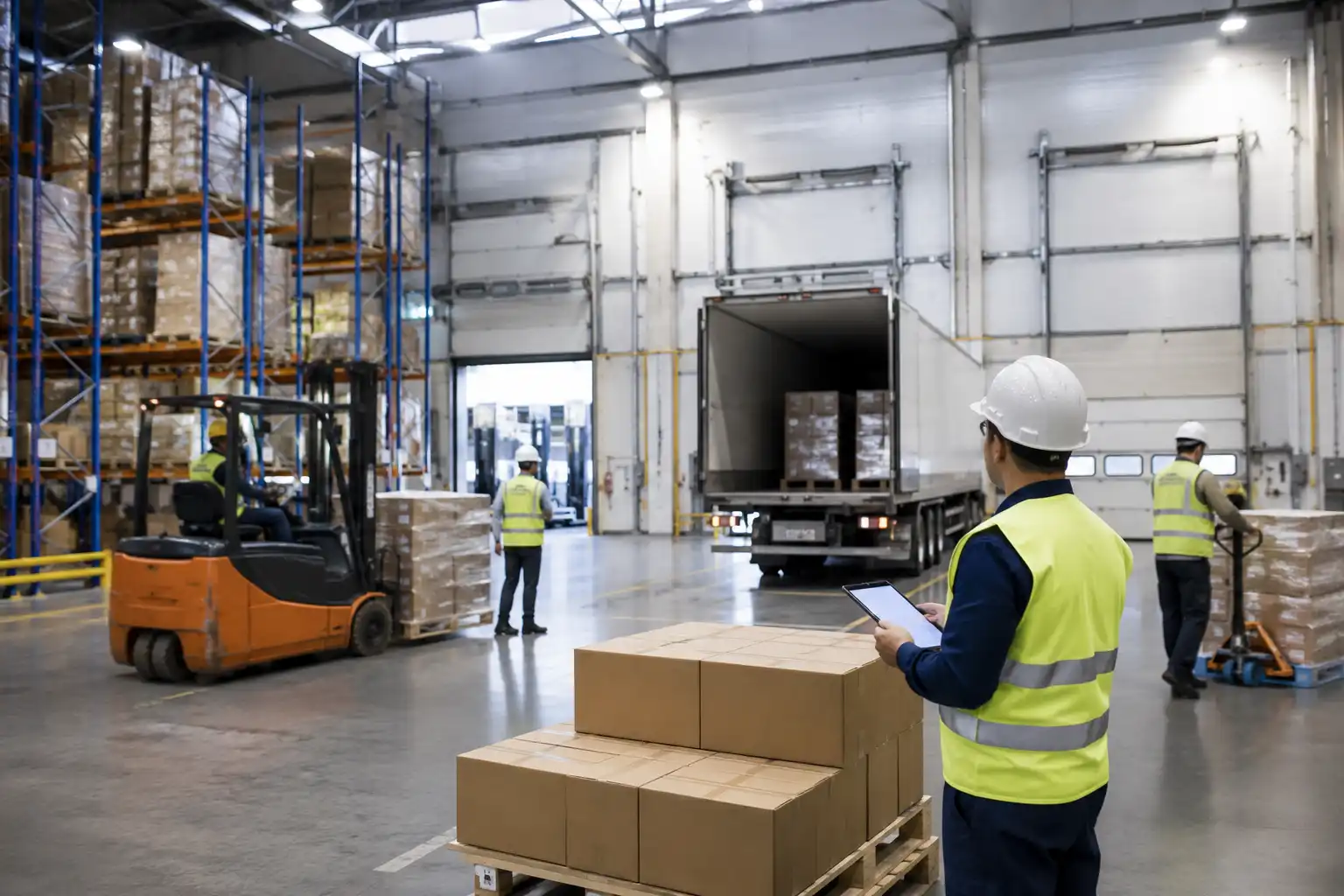
How 3PL Logistics Reduces Supply Chain Costs Without Compromising Service
Quick Answer: 3PL logistics can reduce supply chain costs by consolidating shipments, improving route planning, reducing dependence on owned logistics assets, coordinating warehousing and transport, and giving businesses access to established carrier networks. The objective is not simply to find cheaper freight. Effective third-party logistics services reduce unnecessary handling, idle capacity, fragmented vendors and operational inefficiencies while maintaining agreed delivery and service requirements.
Key Takeaways
- 3PL cost savings usually come from better utilisation and coordination, not from cutting essential service.
- Outsourcing can convert some fixed logistics costs into more flexible operating costs.
- Integrated transport, warehousing and freight planning can reduce duplicated activities and unnecessary handovers.
- Shipment consolidation and better mode selection can improve freight efficiency.
- The right 3PL should be evaluated on total logistics performance, not the lowest transport quotation.
Transport cost is only one part of what a manufacturer, exporter or growing business spends on logistics.
Warehousing, idle vehicles, inventory handling, multiple vendor teams, emergency freight, documentation, port coordination and shipment delays all contribute to the real cost of moving goods.
This is why 3PL logistics is increasingly evaluated as a supply chain operating model rather than simply outsourced transport. A capable third-party provider can combine several logistics functions so that cost reduction comes from better planning and resource utilisation without automatically reducing service quality.
How Does 3PL Logistics Reduce Supply Chain Costs?
The biggest advantage of third-party logistics services is the ability to share logistics infrastructure and networks across multiple customers instead of every business building the same capability independently.
Reducing the Need for Owned Logistics Assets
Running logistics internally can require investment in:
- trucks
- warehouses
- forklifts and material-handling equipment
- logistics staff
- tracking systems
- maintenance
- specialised transport equipment
For businesses that do not use these assets at full capacity throughout the year, ownership can create significant fixed costs.
A 3PL allows companies to purchase required logistics capacity according to their operating needs. This can be particularly valuable for businesses with seasonal production, changing export volumes or expanding distribution networks.
Outsourcing does not automatically make every logistics activity cheaper. The financial benefit depends on shipment frequency, utilisation, geography and the level of service required.
Shipment Consolidation Can Lower Freight Cost Per Movement
One truck carrying two half-loads separately is rarely as efficient as a properly planned consolidated movement.
A 3PL may be able to combine compatible shipments, optimise vehicle utilisation or use LCL consolidation for smaller international sea-freight consignments.
Consolidation can reduce:
- underutilised vehicle capacity
- unnecessary individual pickups
- separate handling activities
- repeated freight-booking administration
The same principle applies to international freight. A business shipping smaller quantities may not always need a full container. Depending on the cargo and route, an LCL or consolidated solution may be more economical.
The correct choice still depends on cargo value, handling sensitivity, shipment urgency and delivery requirements.
Better Route and Transport-Mode Selection Reduces Waste
The cheapest freight mode is not always the lowest-cost supply chain option.
Air freight may cost more than sea freight but can be appropriate for urgent production components. Road transport may offer flexibility, while rail, coastal shipping or multimodal combinations may be useful on suitable corridors.
Integrated logistics solutions allow these decisions to be made across the journey rather than treating each leg separately.
For example, a manufacturer may need:
factory pickup → warehouse → port → ocean freight → destination delivery.
If different vendors manage each step without coordination, waiting time and unnecessary handling can increase.
A 3PL can plan the complete movement around required delivery dates, cargo characteristics and available transport options.
How Warehousing Strategy Influences Supply Chain Cost
Warehousing cost is not only the monthly storage charge.
Businesses also need to consider:
- warehouse location
- inventory handling
- material movement
- loading and unloading
- stock dwell time
- dispatch frequency
- transport distance to customers or ports
A warehouse that looks inexpensive may create higher transport costs if it is badly located for the company’s actual supply chain.
A 3PL can help connect warehousing and distribution decisions. Instead of evaluating the warehouse separately, businesses can assess the total cost of storing, handling and moving inventory.
FAK Worldwide lists manufacturing and industrial 3PL, warehousing and domestic distribution within its logistics capabilities.
Where 3PL Logistics Can Create Cost Efficiency
| Logistics Area | Potential Source of Efficiency |
| Transportation | Better vehicle utilisation and routing |
| Warehousing | Flexible space and handling resources |
| Freight forwarding | Carrier and route coordination |
| Consolidation | Combining compatible smaller shipments |
| Multimodal transport | Matching transport modes to route requirements |
| Administration | Fewer logistics vendors and handovers |
| Specialised cargo | Access to existing technical capability |
| Visibility | Earlier identification of delays or exceptions |
These efficiencies should be measured against agreed service levels rather than pursued in isolation.
Reducing cost by selecting a slower service that regularly disrupts production is not a genuine supply chain saving.
Can Outsourcing Logistics Improve Operational Efficiency?
Yes, when logistics responsibilities are clearly defined.
Manufacturing teams often spend significant time coordinating:
- transporters
- warehouses
- freight forwarders
- customs activities
- shipping lines
- ports and terminals
- delivery appointments
A 3PL can become the main operational interface for agreed parts of this process.
That can allow internal teams to spend less time following individual vehicles or freight bookings and more time managing production, procurement and customer requirements.
The benefit comes from reducing coordination effort, not simply transferring emails from one company to another.
Why Service Quality Still Matters When Reducing Costs
Cost reduction should never be evaluated independently from:
- on-time pickup
- delivery reliability
- cargo condition
- documentation accuracy
- shipment visibility
- response during disruptions
- compliance requirements
This becomes even more important for industrial chemicals, hazardous goods, pharmaceuticals or production-critical components.
For specialised cargo, choosing the cheapest provider without technical capability can create costs elsewhere through rejected shipments, unsuitable equipment or avoidable delays.
FAK’s service portfolio combines conventional freight and 3PL support with ISO tanks, chemical logistics, dangerous-goods packing and multimodal transportation.
3PL Logistics for Indian Manufacturers and Exporters
Indian supply chains often connect inland manufacturing locations with warehouses, domestic customers and international gateways.
A manufacturer in Maharashtra or Gujarat, for example, may need road transport to Nhava Sheva, Hazira or Mundra before international shipment. Businesses may also need air freight through Mumbai or Delhi when delivery speed takes priority.
FAK operates multimodal and freight-forwarding services and is registered with DG Shipping in India as a Multimodal Transport Operator. Its service information also covers domestic transport, international sea and air freight, warehousing support and specialised industrial logistics.
For businesses operating across several modes, the opportunity is to manage these movements as one supply chain rather than purchasing each leg independently.
Industry Insight: Where We Usually Find Avoidable Logistics Cost
When businesses approach us about reducing logistics spend, we often see the conversation begin with freight rates.
In our experience, the larger opportunity is sometimes elsewhere.
A company may be paying for half-filled vehicles, storing inventory far from its main dispatch routes or using emergency air freight because an earlier transport leg was poorly planned.
We also see manufacturers managing several logistics vendors with no clear operational owner. Each individual rate may look competitive, but additional waiting, coordination and handling can increase the total cost.
We generally prefer to map the complete movement first. Understanding shipment volumes, cargo type, routes, delivery commitments and current bottlenecks makes it easier to identify whether consolidation, multimodal transport, warehousing changes or better vendor coordination could improve the operation.
Common Mistakes When Using a 3PL to Reduce Costs
Avoid these common errors:
- Selecting a 3PL only because it offers the lowest freight rate.
- Comparing transport charges without considering total logistics cost.
- Outsourcing without clearly defining service levels.
- Using the same solution for every type of cargo.
- Ignoring specialised requirements for chemicals or dangerous goods.
- Failing to share reliable shipment-volume forecasts.
- Measuring cost without tracking delivery and cargo performance.
- Maintaining unnecessary duplicate internal and outsourced processes.
How to Choose a Cost-Effective 3PL Partner
Look beyond the quotation.
A suitable provider should be able to explain:
- which logistics functions it can coordinate
- its geographic and transport-mode coverage
- how shipment visibility is provided
- how warehousing and transport can work together
- its experience with your cargo type
- how exceptions and delays are managed
- which specialist capabilities are available
- how performance will be measured
The right integrated logistics solutions should fit the operation rather than forcing every customer into the same logistics model.
Why FAK Cargo
FAK Worldwide provides 3PL logistics, domestic transportation, sea freight, air freight, multimodal transport and industrial supply-chain support. Its specialised capabilities also include ISO tank logistics, chemical cargo, export packing and hazardous-goods handling.
For manufacturers handling a mixture of conventional and specialised cargo, these services can be coordinated within a broader logistics plan rather than managed as completely separate movements.
Key Takeaway
The real value of 3PL logistics is not simply paying less for transport. Sustainable cost reduction comes from improving how freight, warehousing, consolidation, routing and logistics coordination work together without sacrificing required service levels.
If your business is reviewing logistics costs, FAK Cargo can assess your current routes, cargo profile and operating requirements to identify where a more integrated 3PL approach may be practical.
FAQs
Q1. How does 3PL logistics help reduce supply chain costs?
A. 3PL logistics can reduce costs through shipment consolidation, better asset utilisation, route optimisation, flexible warehousing and fewer duplicated logistics activities. Actual savings depend on the company’s routes, volumes and operating model.
Q2. Can outsourcing logistics improve operational efficiency?
A. Yes. Outsourcing can reduce the number of logistics activities managed internally and provide a clearer operational interface for transport, warehousing and freight coordination.
Q3. What are the cost-saving benefits of working with a 3PL provider?
A. Potential benefits include lower fixed logistics overheads, better transport utilisation, reduced vendor-management effort, consolidation opportunities and more flexible access to warehouse or freight capacity.
Q4. How does a 3PL improve supply chain performance?
A. A 3PL can coordinate multiple logistics functions, improve visibility, reduce unnecessary handovers and match transport options more closely to delivery requirements.
Q5. Is 3PL logistics suitable for small and growing businesses?
A. Yes, depending on their needs. Smaller and growing businesses can use third-party logistics services to access transport, warehousing and freight capabilities without building every logistics function internally.
Related posts
AI in Export Logistics in 2026: Practical Use Cases for Indian Exporters
Export logistics has always depended on accurate planning, timely documentation,
Project Cargo Logistics: How to Plan Heavy, OOG and Breakbulk Shipments from India
Learn how to plan project cargo logistics from India, including heavy and OOG ca
What Does a 3PL Provider Actually Do? A Complete Guide for Manufacturers
Quick Answer: A 3PL provider, or third-party logistics provider, manages selecte