
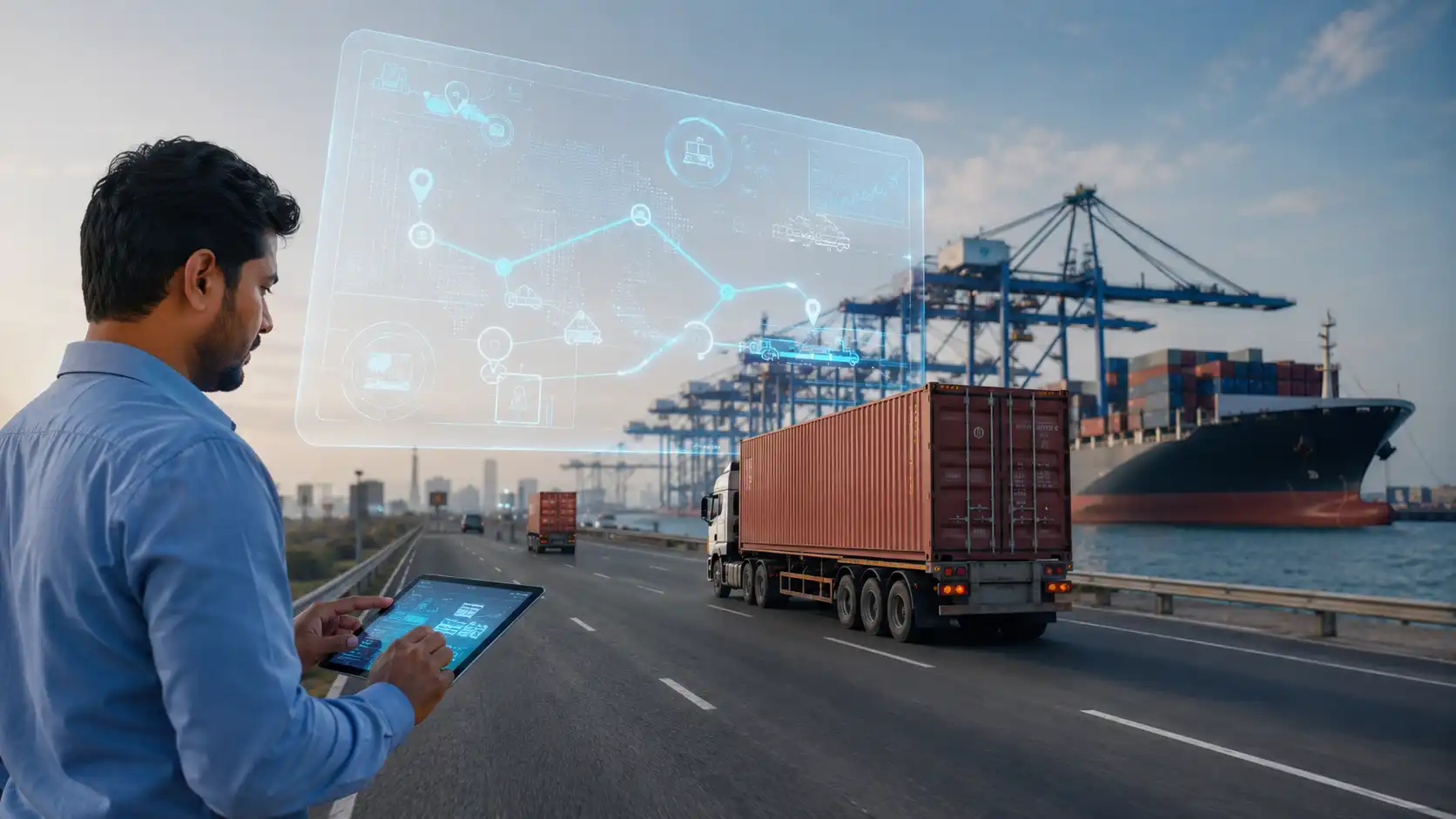
AI in Export Logistics in 2026: Practical Use Cases for Indian Exporters
Export logistics has always depended on accurate planning, timely documentation, and efficient coordination across manufacturers, transporters, customs authorities, freight forwarders, ports, and shipping lines. As global supply chains become more complex, businesses are increasingly adopting Artificial Intelligence (AI) to improve operational efficiency and make faster, data-driven decisions.
For Indian exporters, AI in Export Logistics is no longer just an emerging technology. In 2026, AI is being integrated into logistics software, transportation management systems, customs technology, warehouse operations, demand forecasting, and customer service. While AI does not replace logistics professionals, it helps automate repetitive tasks, identify potential disruptions earlier, and support better decision-making.
Understanding where AI adds practical value enables exporters to modernise their operations while continuing to rely on experienced logistics partners for execution and compliance.
Quick Answer
AI in Export Logistics helps Indian exporters automate documentation workflows, improve shipment visibility, forecast demand, optimise transport routes, predict supply chain risks, and enhance customer communication. AI supports decision-making by analysing large volumes of operational data, while human expertise remains essential for regulatory compliance, customs processes, and strategic logistics planning. AI adoption continues to grow across global logistics platforms in 2026 as organisations seek greater efficiency and resilience.
Why AI Is Becoming Important in Export Logistics
International trade generates enormous amounts of operational data.
Every shipment involves:
- Purchase orders
- Commercial invoices
- Shipping instructions
- Customs documentation
- Carrier schedules
- Container tracking
- Freight quotations
- Delivery milestones
Managing this information manually can be time-consuming and increases the likelihood of errors.
AI-powered systems help businesses organise data, identify patterns, automate repetitive activities, and provide actionable insights that improve logistics planning.
Practical Use Cases of AI in Export Logistics
1. Smarter Documentation Processing
Export documentation remains one of the most time-intensive aspects of international trade.
Modern AI systems can assist by:
- Extracting information from invoices
- Identifying missing document fields
- Comparing shipping documents
- Flagging inconsistencies
- Organising digital records
These capabilities reduce manual effort and help documentation teams detect potential issues before submission.
Human review remains necessary to verify compliance with customs and regulatory requirements.
2. Demand Forecasting
AI analyses historical sales data, seasonal demand, market trends, and operational patterns to generate more accurate demand forecasts.
Better forecasting helps exporters:
- Plan production
- Optimise inventory
- Reserve freight capacity earlier
- Reduce urgent shipments
- Improve customer service
More accurate forecasts also support better financial planning.
3. Shipment Visibility
Real-time shipment tracking has become an important expectation for international buyers.
AI enhances visibility by combining information from multiple sources, including:
- GPS tracking
- Shipping line updates
- Port activity
- Weather information
- Transportation milestones
Instead of simply displaying shipment locations, AI can identify unusual delays and notify logistics teams before they become critical.
4. Predictive Delay Alerts
AI models analyse historical transportation data alongside current operating conditions.
Potential risks that may be identified include:
- Port congestion
- Vessel schedule disruptions
- Weather events
- Traffic delays
- Equipment shortages
These predictive insights allow exporters and logistics providers to respond earlier and minimise operational disruption.
5. Freight Rate Analysis
Freight prices fluctuate based on market demand, carrier capacity, fuel prices, and seasonal conditions.
AI tools can analyse historical and current freight data to help businesses:
- Compare carrier quotations
- Identify pricing trends
- Evaluate transportation options
- Support budgeting decisions
Final carrier selection should continue to consider service quality, transit reliability, and contractual requirements alongside pricing.
6. Warehouse Optimisation
Many warehouses now use AI-enabled systems to improve operational efficiency.
Applications include:
- Inventory allocation
- Storage optimisation
- Picking sequence recommendations
- Labour planning
- Equipment utilisation
These improvements contribute to faster order processing and more efficient export preparation.
7. Customer Service Automation
AI-powered virtual assistants can respond to routine customer enquiries regarding:
- Shipment status
- Documentation requirements
- Booking requests
- Estimated transit times
- General export information
This allows logistics teams to focus on more complex customer requirements.
AI Does Not Replace Logistics Expertise
Although AI provides significant operational benefits, export logistics continues to require human knowledge.
Critical responsibilities such as:
- Customs compliance
- Trade regulations
- Export documentation approval
- Carrier negotiations
- Exception management
- Customer relationship management
still depend on experienced logistics professionals.
AI works best as a decision-support tool rather than a replacement for logistics expertise.
Benefits of AI for Indian Exporters
Businesses adopting AI-supported logistics solutions may experience several advantages.
These include:
Improved Operational Efficiency
Automation reduces repetitive administrative tasks.
Better Decision-Making
AI provides insights based on historical and real-time operational data.
Enhanced Shipment Visibility
Customers receive better shipment tracking information.
Faster Documentation Processing
Document review becomes more efficient.
Improved Cost Planning
AI supports freight analysis and demand forecasting.
Greater Supply Chain Resilience
Early risk identification helps businesses respond proactively.
Challenges Exporters Should Consider
While AI offers significant opportunities, implementation also presents practical considerations.
Common challenges include:
- Initial technology investment
- Employee training
- Data quality
- Integration with existing systems
- Cybersecurity
- Regulatory compliance
- Human oversight requirements
Businesses should evaluate technology solutions based on operational needs rather than adopting AI simply because it is widely discussed.
The Role of Freight Forwarders in an AI-Enabled Supply Chain
Even as technology evolves, freight forwarders remain central to international trade.
Professional Freight Forwarding Solutions combine digital tools with industry expertise to coordinate:
- Transportation planning
- Customs documentation
- Carrier management
- Cargo movement
- Regulatory compliance
- Shipment monitoring
- Customer communication
Many freight forwarders now use AI-enabled platforms internally to improve operational efficiency while continuing to provide personalised logistics support.
Why Technology and Human Expertise Work Best Together
Successful export operations combine automation with professional experience.
AI can process information rapidly, identify trends, and support planning.
Experienced logistics professionals contribute:
- Commercial judgement
- Regulatory knowledge
- Problem-solving
- Industry relationships
- Risk management
- Strategic decision-making
This balanced approach enables exporters to benefit from technological innovation while maintaining operational reliability.
How FAK Cargo Supports Modern Export Logistics
International logistics continues to evolve as digital technologies become more widely adopted.
FAK Cargo combines operational expertise with modern logistics practices to deliver reliable Freight Forwarding service solutions for exporters across industries. From documentation coordination and transportation planning to shipment monitoring and customs support, the team focuses on efficient cargo movement while adapting to changing industry technologies.
As AI-powered logistics platforms continue to develop, FAK Cargo remains committed to providing practical logistics expertise, responsive customer service, and dependable supply chain support that helps businesses navigate international trade with confidence.
Conclusion
The adoption of AI in Export Logistics is transforming how exporters plan, monitor, and manage international shipments in 2026. From smarter documentation processing and predictive shipment monitoring to demand forecasting and warehouse optimisation, AI offers practical tools that improve operational efficiency.
However, successful export logistics still depends on experienced professionals who understand customs regulations, documentation requirements, and global transportation networks.
For Indian exporters, the greatest value comes from combining AI-powered technology with trusted logistics expertise, enabling smarter decisions, stronger supply chains, and more reliable international trade operations.
Looking for a Reliable Logistics Partner for Your Global Shipments?
At FAK Cargo, we provide customised logistics solutions backed by industry expertise, reliable global networks, and a customer-first approach. From freight forwarding and multimodal transportation to export support and specialised cargo handling, our team works closely with businesses to ensure shipments move safely, efficiently, and on schedule.
Get in touch with FAK Cargo today to discuss your logistics requirements and discover solutions tailored to your business goals.
Frequently Asked Questions
Q1. What is AI in Export Logistics?
A. AI in export logistics refers to the use of artificial intelligence to improve logistics processes such as documentation, shipment tracking, demand forecasting, route planning, and operational decision-making.
Q2. Can AI replace freight forwarders?
A. No. AI supports logistics operations through automation and data analysis, but freight forwarders remain essential for customs compliance, documentation, carrier coordination, and managing complex shipment requirements.
Q3. How does AI improve shipment visibility?
A. AI analyses data from tracking systems, carriers, ports, and transportation networks to provide better shipment monitoring and identify potential delays earlier.
Q4. Is AI useful for small and medium exporters?
A. Yes. Many cloud-based logistics platforms now include AI-powered features that help businesses improve documentation, forecasting, shipment tracking, and operational efficiency without requiring large technology investments.
Q5. How can a Freight Forwarding service complement AI?
A. A professional freight forwarder combines AI-enabled operational tools with logistics expertise, helping exporters manage transportation, documentation, customs processes, and international shipping more effectively.
Related posts
Project Cargo Logistics: How to Plan Heavy, OOG and Breakbulk Shipments from India
Learn how to plan project cargo logistics from India, including heavy and OOG ca
What Does a 3PL Provider Actually Do? A Complete Guide for Manufacturers
Quick Answer: A 3PL provider, or third-party logistics provider, manages selecte
Landed Cost Calculation for Exporters: How to Quote International Buyers Accurately
Winning an export order is about more than offering the lowest price. Internatio