
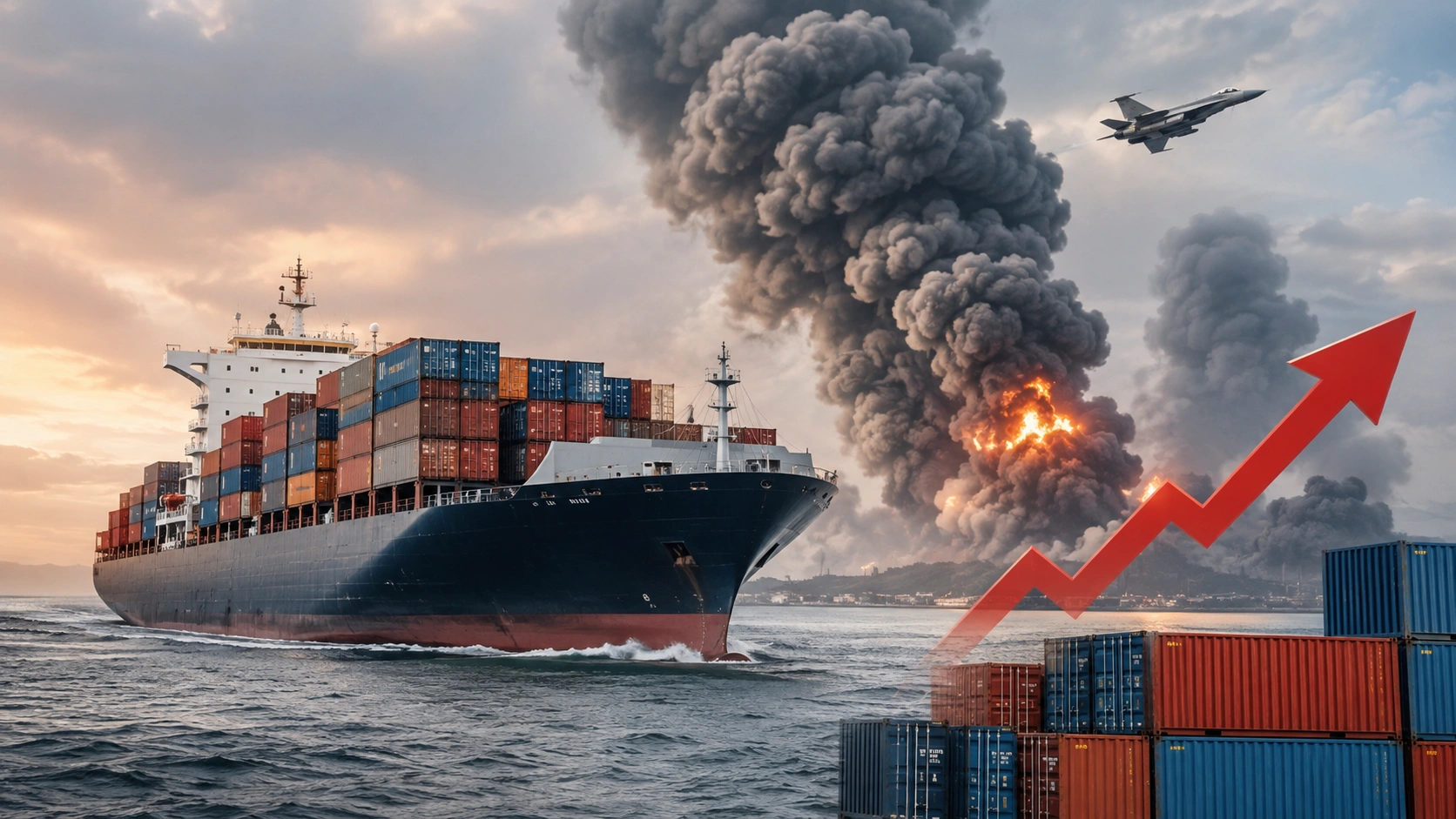
How Does a War Affect International Shipping Costs for Businesses?
Quick Answer
War can increase international shipping costs by disrupting trade routes, raising fuel and insurance expenses, reducing available shipping capacity, and delaying cargo movements. Businesses may also face higher port charges, additional handling costs, and expenses associated with rerouting shipments. The actual impact depends on the conflict’s location, the shipping route, cargo type, carrier decisions, and the duration of the disruption.
For exporters and importers, understanding these cost drivers helps with freight budgeting, shipment planning, and selecting suitable logistics arrangements.
Key Takeaways
- Conflict can increase freight rates through rerouting, fuel price changes, insurance premiums, and capacity constraints.
- Longer transit times can create additional inventory, storage, and working capital costs.
- Indian exporters and importers should assess their exposure to affected maritime routes and international trade corridors.
- Comparing alternative routes, reviewing freight quotations, and maintaining clear communication with logistics providers can help manage uncertainty.
- A flexible logistics plan can reduce the risk of shipment disruptions becoming wider operational problems.
Introduction
International shipping depends on predictable transport routes, stable fuel availability, functioning ports, and reliable coordination between carriers, freight forwarders, and other supply-chain participants.
When war or geopolitical conflict disrupts these conditions, the consequences can extend well beyond the affected region. Ships may need to avoid certain waters, carriers may revise schedules, insurers may reassess risks, and businesses may face changing freight quotations.
For companies involved in international trade, these developments can make logistics budgets less predictable. A shipment that was commercially viable when booked may become more expensive if its route, transit time, or handling requirements change.
Understanding the impact of war on global supply chains helps businesses identify where additional costs may arise and what steps they can take to manage them.
How Does War Increase International Shipping Costs?
1. Rerouting and Longer Sailing Distances
One of the most direct effects of conflict is the disruption of established shipping routes. If a maritime corridor becomes unsafe or inaccessible, carriers may divert vessels through alternative routes.
Longer journeys can increase fuel consumption, extend vessel utilisation time, and delay the availability of containers for subsequent shipments. These costs may be reflected in freight rates or other charges, depending on the carrier’s pricing structure.
For example, if a vessel travelling between Asia and Europe must avoid a disrupted maritime corridor, its revised journey may require additional sailing time. An Indian exporter shipping machinery to a European buyer could face a revised estimated arrival date and potentially higher freight charges.
However, not every shipment is affected equally. The impact depends on the selected route, carrier decisions, and the availability of alternatives.
2. Higher Fuel and Bunker Costs
Shipping vessels consume substantial quantities of fuel, and changes in energy markets can affect operating expenses.
War may disrupt oil production, refining, transportation, or regional energy supplies. Even businesses shipping through unaffected waters can experience indirect cost increases if global fuel prices rise.
Carriers may respond through fuel-related surcharges or changes to their freight quotations. The timing and extent of these adjustments depend on their commercial policies and the terms agreed with customers.
Businesses should therefore check whether their freight quotations include fuel-related charges, how long the rates remain valid, and under what conditions additional surcharges may apply.
3. Higher War-Risk Insurance and Security Costs
Conflict can increase the perceived risk of operating vessels in or near affected regions.
Insurers may revise premiums, impose additional conditions, or restrict certain types of coverage. Carriers may also incur additional security-related expenses when operating in higher-risk areas.
These costs can influence the price of transporting cargo through affected regions.
Businesses should distinguish between ordinary cargo insurance, carrier liability, and any additional war-risk coverage that may be relevant. These are not interchangeable, and the existence of a freight quotation does not automatically mean that all war-related risks are insured.
Before confirming a shipment, exporters and importers should ask their logistics provider which insurance arrangements apply and whether additional costs or exclusions need to be considered.
4. Reduced Shipping Capacity and Higher Freight Rates
Conflict can affect the availability of vessels, containers, port services, and transport capacity. Rerouting may also tie up vessels for longer periods, reducing the capacity available for other shipments.
When available capacity tightens relative to demand, carriers may revise freight rates or introduce additional charges.
This can create uncertainty for businesses that depend on regular exports or imported raw materials. A manufacturer may need to revise its procurement budget if the cost of transporting essential components rises between quotation and booking.
Businesses should avoid assuming that higher freight costs will always result from war. Rates also depend on seasonal demand, carrier capacity, trade volumes, and other market conditions.
5. Port Disruptions, Delays and Additional Handling
Conflict may affect port operations, access to terminals, regional transport infrastructure, or the availability of onward connections.
Even when a port remains operational, vessel schedule changes can lead to missed connections, cargo storage, additional handling, or rescheduling expenses.
For containerised shipments, delays can also create demurrage or detention charges when applicable contractual free-time conditions are exceeded.
Businesses should clarify which charges may arise from delays, how exceptions are handled, and whether the relevant service agreement allocates responsibility for specific costs.
What Is the Business Impact of Freight Costs During War?
The financial effect extends beyond the freight invoice. Higher transport costs and longer transit times can affect purchasing decisions, customer commitments, inventory levels, and profit margins.
| Cost or disruption | Potential business impact | Practical response |
| Higher freight rates | Increased cost per shipment | Compare complete quotations and review rate validity |
| Route diversions | Longer transit times | Reassess delivery schedules and inventory buffers |
| Fuel surcharges | Less predictable freight budgets | Clarify surcharge terms before booking |
| War-risk insurance costs | Higher shipment protection expenses | Review coverage and exclusions |
| Port congestion or delays | Storage, demurrage, or detention costs | Monitor milestones and applicable free-time limits |
| Capacity constraints | Difficulty securing suitable bookings | Plan shipments earlier where possible |
For exporters, rising logistics costs can reduce margins or make quoted prices less competitive. Importers may face higher input costs and production delays if raw materials arrive later than planned.
Businesses should therefore assess both direct shipping expenses and the wider cost of delayed cargo.
How Can Indian Exporters and Importers Manage War-Related Shipping Disruptions?
Indian businesses trading internationally should assess whether their shipments depend on affected maritime corridors, ports, or transshipment connections.
Routes involving regions such as the Red Sea, the Suez Canal, or the Strait of Hormuz may have different exposure depending on the nature and location of a conflict. These routes are not interchangeable, and their relevance varies by origin, destination, carrier, and cargo.
Practical steps include:
- Review shipment exposure: Identify the origin, destination, planned route, and any critical transshipment points.
- Request updated quotations: Confirm whether rates, surcharges, transit estimates, and booking conditions have changed.
- Plan around realistic timelines: Allow suitable flexibility for cargo that supports production schedules or contractual delivery commitments.
- Evaluate alternative arrangements: Ask the logistics provider whether another route or transport mode is operationally and commercially suitable.
- Monitor documentation and compliance: Confirm whether route changes affect transit arrangements, permits, insurance, or other shipment requirements.
- Communicate with overseas customers and suppliers: Share revised delivery estimates promptly when disruptions affect agreed schedules.
Alternative routes are not always cheaper or faster. A decision should consider the complete landed cost, including additional transport, handling, insurance, and inventory implications.
Industry Insight: Evaluate the Entire Shipment, Not Just the Freight Rate
From a logistics coordination perspective, conflict-related disruptions require businesses to look beyond the revised freight quotation. A route change may affect the vessel schedule, cargo handover, insurance arrangements, connecting transport, and final delivery date.
We recommend reviewing these dependencies together before accepting a revised shipment plan. Businesses should understand which charges have changed, why they have changed, and whether alternative arrangements are available within their operational requirements.
For FAK Cargo, this approach aligns with the importance of coordinating freight forwarding, transportation, cargo handling, and related logistics requirements within a clearly defined service scope. Transparent communication helps businesses make informed decisions when shipping conditions change.
Common Mistakes Businesses Should Avoid
- Assuming every route is affected equally: Assess the actual shipment route and the nature of the disruption.
- Comparing only base freight rates: Include surcharges, handling, insurance, and potential delay-related expenses.
- Ignoring quotation validity: Confirm how long the quoted rate applies and when revisions may occur.
- Changing routes without reviewing the full cost: Consider transit time, additional handling, documentation, and insurance implications.
- Overlooking cargo insurance exclusions: Verify the policy terms rather than assuming all conflict-related losses are covered.
- Waiting until a shipment is delayed to seek updates: Maintain regular communication with the logistics provider and monitor important milestones.
How to Prepare for Shipping Cost Volatility
Use this checklist when planning international shipments during geopolitical uncertainty:
- Identify the shipment’s planned route and potential disruption points.
- Confirm freight rates, quotation validity, and applicable surcharges.
- Review cargo insurance and any relevant war-risk provisions.
- Check estimated transit times and alternative routing options.
- Establish procedures for communicating delays and additional charges.
- Assess the impact of late delivery on inventory and customer commitments.
- Review the service agreement before approving material changes.
How FAK Cargo Can Support Your Shipping Requirements
FAK Cargo provides logistics services across freight forwarding, third-party logistics, ISO tank logistics, dangerous goods and chemical cargo, export packing, port agency, and multimodal transportation.
Businesses facing shipping uncertainty can discuss their cargo requirements, transportation arrangements, and coordination needs to understand which services may be appropriate for their shipments.
Key Takeaway
War can increase international shipping costs through route diversions, fuel price changes, insurance expenses, capacity constraints, and delays. The extent of the impact depends on the shipment’s route and circumstances, making timely information and flexible planning essential.
If your business is reviewing freight budgets or planning shipments amid geopolitical uncertainty, contact FAK Cargo to discuss your freight forwarding and logistics requirements.
Frequently Asked Questions
Q1. Why do international shipping costs increase during war?
A. Costs may rise because of longer routes, higher fuel expenses, war-risk insurance premiums, reduced shipping capacity, and additional handling or delay-related charges.
Q2. How does war affect global supply chains?
A. War can disrupt transportation routes, delay deliveries, increase logistics costs, and interrupt the movement of raw materials and finished goods between countries.
Q3. Can war increase freight costs for shipments outside the conflict zone?
A. Yes. Global fuel prices, carrier capacity, insurance conditions, and network disruptions can affect shipments even when their routes do not pass through the affected region.
Q4. How can businesses reduce freight costs during war?
A. Businesses can compare complete freight quotations, plan shipments earlier, evaluate alternative routes, review surcharge terms, and coordinate closely with logistics providers. Savings depend on the available options and shipment requirements.
Q5. Does cargo insurance cover losses caused by war?
A. Not automatically. Coverage depends on the policy wording, exclusions, and any applicable war-risk provisions. Businesses should review their insurance terms with their insurer or broker before shipping.
Related posts
Container Stuffing Best Practices for Safe Ocean Freight
Quick Answer: Safe container stuffing means inspecting the container, planning w
FCL vs LCL Shipping: Which Is Better for Your Export Cargo?
Compare FCL vs LCL shipping for export cargo, including costs, cargo volume, han

Leave a Reply