
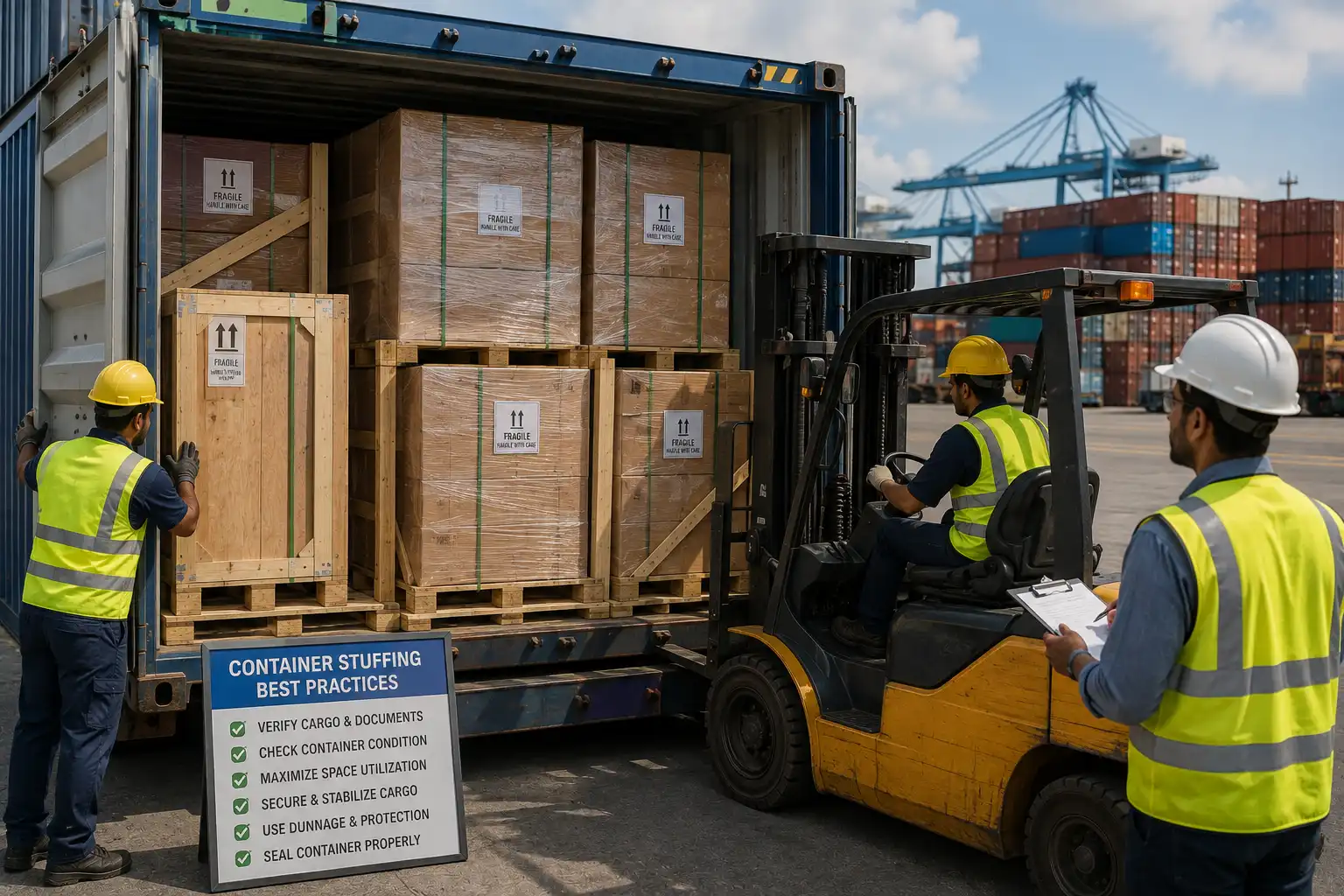
Container Stuffing Best Practices for Safe Ocean Freight
Quick Answer: Safe container stuffing means inspecting the container, planning weight distribution, using suitable packaging, securing cargo against movement, managing moisture, separating incompatible goods and verifying the packed container’s gross mass. The objective is not simply to fit maximum cargo inside a container. It is to ensure that the load can withstand handling, inland transport and vessel movement without shifting, damaging the goods or creating safety risks.
Key Takeaways
- Inspect the container before loading and reject units with defects that could affect cargo safety.
- Distribute cargo weight evenly and keep the centre of gravity as low and central as practical.
- Use blocking, bracing, dunnage and lashing where cargo does not form a tight, stable stow.
- Include pallets, dunnage and securing materials when determining container weight and SOLAS Verified Gross Mass.
- Dangerous goods require additional checks for segregation, packaging, labelling and IMDG compliance.
A shipment can be correctly packed, documented and booked with reliable sea freight services, yet still suffer damage if the container itself is loaded poorly.
During an international movement, a container experiences road vibration, terminal handling, crane movements and vessel motions in multiple directions. Heavy cargo that seems stable while standing inside a warehouse may behave very differently during a sea voyage.
That makes professional container stuffing a critical part of ocean-freight preparation.
What Is Container Stuffing in Ocean Freight?
Container stuffing is the process of loading, positioning and securing cargo inside a freight container for transport.
The term covers much more than placing cartons or pallets into the available space. Safe stuffing requires planning around:
- cargo weight and dimensions
- packaging strength
- centre of gravity
- compatibility between products
- container payload limits
- load distribution
- moisture sensitivity
- securing requirements
- unloading sequence
- dangerous-goods regulations, where applicable
The IMO/ILO/UNECE Code of Practice for Packing of Cargo Transport Units, commonly called the CTU Code, provides internationally recognised guidance for packing and securing cargo in containers and other intermodal transport units. The Code applies across road, rail and sea transport and remains an important reference for container-packing practice.
Inspect the Shipping Container Before Stuffing
The first best practice happens before the cargo enters the container.
The empty container should be checked internally and externally for obvious defects that could compromise the load.
Look for:
- holes or significant structural damage
- damaged flooring
- defective doors or locking mechanisms
- water ingress
- contamination, residue or strong odours
- protruding nails or sharp objects
- excessive moisture
- damaged securing points
For dangerous goods, the current IMDG provisions specifically require the cargo transport unit to be inspected before loading and packages that are damaged or leaking must not be packed into it.
A clean, dry and structurally suitable container is the starting point for safe stuffing.
Plan Weight Distribution Before Loading Begins
One of the most important container stuffing principles is that cargo weight should not simply be concentrated wherever it fits.
Poor distribution can create stability problems during road transport, handling and ocean carriage.
Keep Heavy Cargo Low
Heavy goods should generally be positioned low rather than stacked above lighter cargo. This helps maintain a lower centre of gravity.
Avoid Concentrated Floor Loads
A heavy machine may be within the container’s total payload but still put excessive force on a small section of the floor.
Depending on the cargo, suitable load-spreading arrangements may be necessary.
Balance the Load
Weight should be distributed as evenly as practical from side to side and along the container length.
The CTU Code encourages packing plans that create either a tight stow, where packages support one another appropriately, or a secured stow using suitable blocking and lashing.
Prevent Cargo Movement With Blocking, Bracing and Lashing
Simply closing the container doors does not secure the cargo.
Ships experience longitudinal, vertical and significant transverse movements at sea. IMO guidance identifies these forces as a major reason cargo securing requires careful planning.
Depending on the shipment, securing methods may include:
- timber or engineered blocking
- bracing
- dunnage
- lashing straps
- suitable securing points
- anti-slip material
- inflatable dunnage bags
- load-spreading arrangements
The exact solution depends on cargo weight, packaging and container type.
For machinery or industrial cargo, the securing design should account for the forces likely to act on the cargo rather than relying on its static weight to keep it in position.
Match Packaging to the Ocean Freight Environment
Container stuffing cannot compensate for unsuitable packaging.
Before loading, confirm that cartons, crates, pallets, drums or machinery bases can tolerate stacking, handling and transit conditions.
For export cargo, check:
- pallet strength
- crate construction
- carton compression resistance
- drum condition
- lifting points
- package markings
- moisture protection
- ISPM 15 requirements for applicable raw-wood packaging
FAK Worldwide provides export packaging services including UN-approved packaging for DG products, palletisation and ISPM 15-certified pine-wood crates, boxes and pallets.
Packaging and container securing should therefore be designed as parts of the same shipment plan.
Control Moisture and Container Condensation
Ocean freight can expose cargo to changing temperature and humidity conditions.
For moisture-sensitive machinery, metals, electronics or packaged products, condensation inside the container can cause corrosion, weakening of cartons or product deterioration.
Depending on the cargo and route, preventive measures can include:
- ensuring cargo is dry before loading
- avoiding wet pallets and dunnage
- suitable barrier wrapping
- desiccants
- corrosion-protection materials
- appropriate ventilation where technically suitable
The correct method depends on the commodity and voyage conditions. Adding desiccants without understanding the cargo or container environment should not replace proper moisture planning.
Verify Container Weight Before Vessel Loading
Correct weight declaration is a safety requirement, not simply a documentation formality.
Under SOLAS, the shipper is responsible for providing the Verified Gross Mass, or VGM, of a packed container. A packed container normally cannot be loaded onto a SOLAS-regulated ship without the verified weight being available to the terminal and vessel representatives.
VGM can be established by either:
- weighing the packed container, or
- using an approved method to add the weights of the cargo, pallets, packing, dunnage and securing material to the container tare weight.
This is another reason careful container stuffing records matter.
Dangerous Goods Need Additional Stuffing Controls
Dangerous goods introduce additional requirements beyond normal cargo securing.
For packaged DG cargo moving by sea, shippers must consider:
- IMDG classification
- packaging approval
- hazard marks and labels
- segregation between incompatible substances
- orientation requirements
- container placarding
- dangerous-goods documentation
- securing of individual packages
IMDG Amendment 42-24 is the mandatory edition from 1 January 2026. Its container-packing provisions require, among other things, inspection of the cargo transport unit and correct segregation of incompatible dangerous goods.
For chemical exporters, DG compliance should be integrated into the stuffing plan before the truck or container arrives.
Container Stuffing for Indian Export Shipments
For exporters moving cargo through Indian gateways such as Nhava Sheva, Mundra, Hazira or Chennai, container loading must account for the entire journey from factory to vessel.
A typical movement may involve:
factory loading → road haulage → CFS or terminal handling → port stacking → vessel loading → ocean transit → destination handling.
The cargo must remain stable through all of these stages.
Working with freight forwarding services that understand the inland and ocean legs together can help coordinate container selection, export packing, documentation, VGM deadlines and shipping-line requirements before gate-in.
Industry Insight: What We Look for During Container Loading
When businesses approach us for sea freight services, we often find that the freight booking receives more attention than the actual stuffing plan.
In our experience, some of the most avoidable problems begin with simple issues such as an unsuitable container, poorly distributed heavy cargo or insufficient securing.
One common mistake we observe is assuming that because cargo fills most of the container, it cannot move. Small gaps can still allow heavy packages to build momentum during transport.
We also look at how the container will be unloaded. A stuffing pattern that maximises space but makes safe discharge difficult at destination may not be the right solution.
The best loading plan considers the entire movement, not only how much cargo can fit through the container doors.
Common Container Stuffing Mistakes to Avoid
- Loading without inspecting the empty container.
- Concentrating heavy cargo on one side or one small floor area.
- Placing heavy packages above lighter goods.
- Leaving cargo unsecured because the container appears full.
- Using damaged pallets, drums or crates.
- Ignoring moisture and condensation risk.
- Mixing incompatible products.
- Exceeding container or road payload limits.
- Forgetting dunnage and packing material when calculating VGM.
- Planning loading without considering unloading at destination.
Choosing the Right Container Stuffing and Logistics Partner
A competent provider should understand the interaction between packing, loading and the complete export movement.
Relevant capabilities can include:
- cargo and container assessment
- export packing
- palletisation
- loading coordination
- cargo securing
- DG handling
- VGM and documentation coordination
- customs support
- FCL and LCL ocean freight
- multimodal transport
A forwarder should ask about cargo weight, dimensions, packaging and special handling requirements before recommending the transport solution.
Why Choose FAK Worldwide for Reliable Export Handling?
FAK Worldwide brings export packing, container handling and international freight logistics together to help businesses manage complex shipments more efficiently. Its capabilities include DG packing, UN-approved packaging, palletisation, ISPM-15-certified wooden packaging and cargo securing. The team can also coordinate customs, warehousing and FCL or LCL ocean freight as part of the wider export movement.
By considering factors such as cargo type, packaging, weight, transport mode and destination requirements, FAK Worldwide can help create a more organised shipment plan. This integrated approach makes it easier for exporters to address packing, compliance, documentation and transportation requirements within a coordinated logistics process.
Conclusion
Safe container stuffing is not about fitting the maximum possible cargo into a container. It is about ensuring the goods remain properly packed, balanced and secured through inland transport, port handling and ocean movement.
If your business needs support with container loading, export packing or international freight forwarding services, FAK Worldwide can review the cargo, equipment and route requirements as part of the wider sea-freight plan.
FAQs
Q1. What is container stuffing in ocean freight?
A. Container stuffing is the process of loading, positioning and securing cargo inside a shipping container so it can be transported safely by road, terminal equipment and ocean vessel.
Q2. What are the best practices for loading a shipping container?
A. Inspect the container, plan weight distribution, use suitable packaging, place heavy cargo low, secure goods against movement, manage moisture, check compatibility and verify the final container weight.
Q3. How can improper container stuffing damage cargo?
A.Poor stuffing can allow cargo to slide, topple, collide or place excessive pressure on other packages. It can also contribute to container instability, packaging failure and damage during handling or vessel movement.
Q4. What factors should be considered before stuffing a container?
A.Consider cargo dimensions, weight, centre of gravity, packaging strength, container payload, floor loading, moisture sensitivity, dangerous-goods status, securing requirements and destination unloading arrangements.
Q5. Why is professional container stuffing important for export shipments?
A.Professional loading helps connect packaging, weight distribution, securing, DG requirements, VGM and ocean-freight procedures into one planned operation. This reduces avoidable handling and cargo-security risks.
Related posts
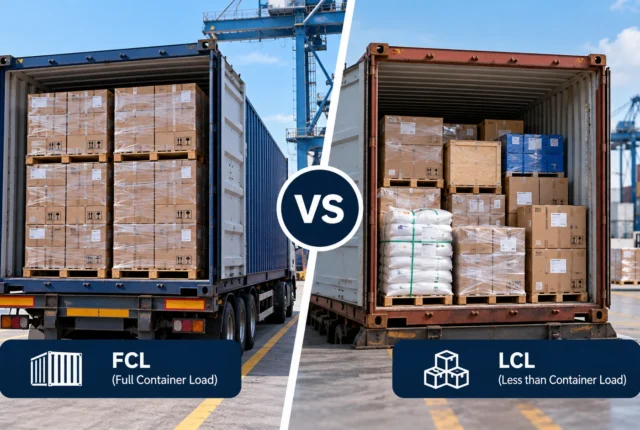
FCL vs LCL Shipping: Which Is Better for Your Export Cargo?
Compare FCL vs LCL shipping for export cargo, including costs, cargo volume, han