
FCL vs LCL Shipping: Which Is Better for Your Export Cargo?
Quick Answer: FCL vs LCL shipping depends mainly on your cargo volume, shipment frequency, budget, handling requirements, and delivery priorities. FCL, or Full Container Load, is generally suitable when your cargo can efficiently use most or all of a container. LCL, or Less than Container Load, allows exporters to share container space when their cargo does not justify a full container. The right choice should consider total logistics cost, transit requirements, cargo characteristics, handling risk, and operational convenience rather than freight rate alone.
Key Takeaways
- FCL gives exporters dedicated container space and fewer cargo handling points.
- LCL can be practical for smaller export shipments that do not require a full container.
- FCL can offer better control over cargo movement, while LCL provides greater flexibility for smaller volumes.
- Cargo type, shipment frequency, destination, and delivery timelines should influence the decision.
- Experienced freight forwarding support can help exporters select the most suitable shipping method.
Introduction
Choosing between FCL and LCL is one of the basic decisions exporters make when planning ocean shipments. While the difference appears simple, the more suitable option can vary considerably depending on cargo volume, destination, handling requirements, and shipment schedule.
For businesses using sea freight services, selecting the right container option can affect not only freight cost but also cargo handling, documentation, transit planning, and delivery coordination.
So, when comparing FCL vs LCL shipping, exporters should look beyond the quoted freight rate and evaluate the complete movement of their cargo.
What Is FCL Shipping?
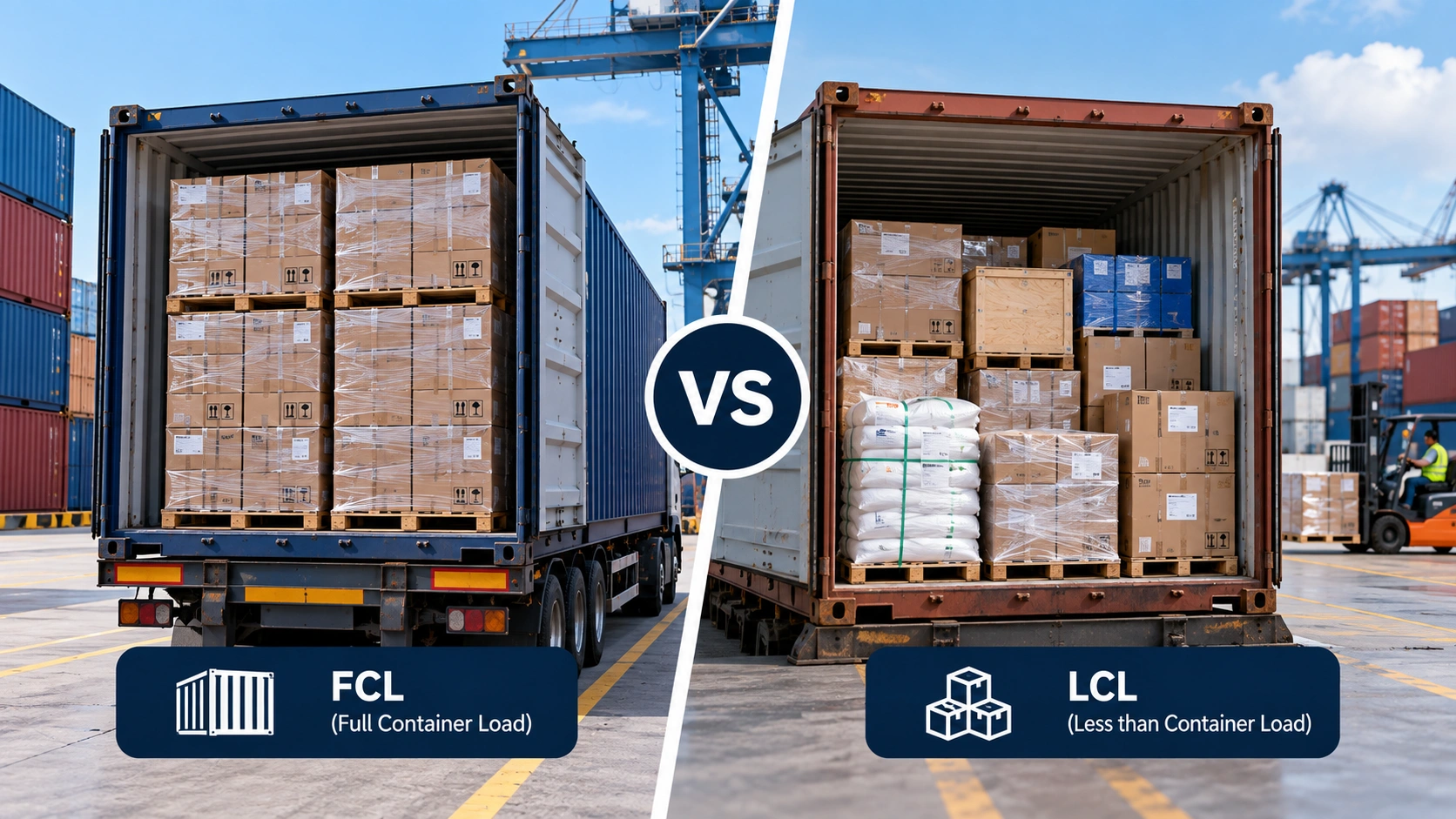
FCL stands for Full Container Load. Under FCL shipping, an exporter books an entire container for their cargo, even if the container is not physically filled to its maximum capacity.
Common container sizes include 20-foot and 40-foot containers, with other equipment available depending on cargo requirements.
When Is FCL Suitable?
FCL may be appropriate when:
- The shipment volume is large enough to justify a container.
- Cargo requires dedicated container space.
- The exporter wants fewer cargo handling points.
- The shipment has a regular or predictable schedule.
- Cargo needs additional control during transportation.
- The destination and delivery plan support direct container movement.
For example, an exporter shipping a large machinery consignment may find FCL more practical than splitting the cargo into shared container space.
What Is LCL Shipping?
LCL stands for Less than Container Load. Instead of booking an entire container, exporters share container space with cargo belonging to other shippers.
This can be useful for smaller consignments where using an entire container would leave significant unused capacity.
When Is LCL Suitable?
LCL may work well when:
- The shipment does not require a full container.
- Export volumes are relatively small.
- The business ships smaller quantities periodically.
- Flexibility is more important than having dedicated container space.
- The exporter wants to avoid booking an entire container for a small consignment.
For example, a manufacturer exporting several pallets of products may use LCL instead of paying for a full container that would remain largely empty.
FCL vs LCL Shipping: What Is the Difference?
| Factor | FCL | LCL |
| Container space | Dedicated to one shipment | Shared with other shipments |
| Suitable cargo volume | Larger shipments | Smaller shipments |
| Cargo handling | Generally fewer handling points | More consolidation and deconsolidation handling |
| Cost approach | Container-based | Cargo/volume-based |
| Control | Greater control over container movement | Shared movement |
| Flexibility | Suitable for planned larger shipments | Useful for smaller consignments |
| Planning | Often easier for regular container volumes | Requires coordination around consolidation |
The most economical option is not automatically the one with the lower quoted freight rate. Exporters should consider the complete logistics cost, including handling, consolidation, storage, documentation, and delivery requirements.
Which Is More Cost-Effective: FCL or LCL?
There is no universal answer.
For a small shipment, paying for an entire container may result in unused capacity, making LCL more practical. As cargo volume increases, FCL can become more cost-effective because the exporter is using a larger share of the container.
However, the calculation should also consider:
- Origin handling
- Consolidation or deconsolidation charges
- Documentation
- Port-related charges
- Warehousing
- Delivery costs
- Cargo handling requirements
- Potential storage or delay costs
This is why exporters should compare the total landed logistics cost, rather than comparing only the ocean freight component.
How Do Cargo Type and Handling Requirements Affect the Choice?
Cargo characteristics can influence the decision significantly.
Fragile, high-value, oversized, or specialised cargo may require more careful planning and handling. Certain goods may also have specific packaging, documentation, safety, or regulatory requirements.
For chemical and DG cargo, exporters should ensure that the selected shipping arrangement is compatible with applicable requirements and that documentation and handling are properly coordinated.
This is where experienced international freight forwarding services can add value by coordinating the different stages of an export movement.
What Should Indian Exporters Consider?
For Indian exporters, the choice between FCL and LCL also depends on the origin location, port connectivity, destination, cargo profile, and shipping schedule.
Exporters may route cargo through major gateways such as Nhava Sheva/JNPT, Mundra, or other suitable Indian ports, depending on their supply chain and carrier arrangements.
The right approach is to evaluate the complete movement from the warehouse to the destination rather than selecting a container type in isolation.
Industry Insight
From a logistics perspective, we look at the shipment as a complete movement rather than simply asking whether FCL or LCL has the lower freight rate.
Cargo volume is the starting point, but we also consider the cargo type, origin, destination, handling requirements, shipment frequency, and delivery expectations. A solution that looks cheaper at the freight stage may not necessarily remain cheaper after consolidation, handling, storage, and delivery costs are considered.
For exporters, the better decision is therefore the option that provides the right balance of cost, control, reliability, and operational efficiency.
Common Mistakes When Choosing Between FCL and LCL
Exporters should avoid:
- Choosing based only on the quoted ocean freight.
- Assuming FCL is always cheaper for larger shipments.
- Using LCL without considering additional handling and consolidation costs.
- Ignoring cargo-specific handling requirements.
- Not accounting for warehouse and delivery timelines.
- Selecting a shipping option without considering shipment frequency.
- Failing to compare the complete logistics cost.
How Should You Choose Between FCL and LCL?
Before confirming a shipment, consider:
- Cargo volume: How much space does the shipment actually require?
- Cargo characteristics: Does it need dedicated or specialised handling?
- Frequency: Is this a one-time or recurring export movement?
- Destination: What routing and consolidation options are available?
- Timeline: How important are schedule and delivery predictability?
- Total cost: What will the complete movement cost, beyond ocean freight?
- Operational requirements: Who will coordinate documentation, handling, forwarding, and delivery?
A freight forwarding partner can help evaluate these factors before the shipment is booked.
Why FAK Cargo?
FAK Cargo supports exporters with sea freight services and international freight forwarding services, helping coordinate cargo movement, documentation, handling, and related logistics requirements.
For businesses handling specialised or regulated cargo, FAK Cargo also provides relevant logistics capabilities across areas such as chemical and DG cargo, ISO tank logistics, export packing, port agency, and multimodal transportation.
Key Takeaway
FCL and LCL serve different export requirements. FCL vs LCL shipping should be decided based on cargo volume, handling needs, destination, timeline, and total logistics cost rather than freight price alone.
For exporters unsure which option best fits their shipment, evaluating the complete cargo movement with an experienced freight forwarding partner can help identify a more practical and cost-effective solution.
FAQs
Q1. Is FCL cheaper than LCL?
A. FCL can be more cost-effective when cargo volume is large enough to use a substantial portion of the container. LCL may be more practical for smaller shipments.
Q2. What is the main difference between FCL and LCL?
A. FCL uses a dedicated container for one shipment, while LCL combines cargo from multiple shippers in the same container.
Q3. Is LCL suitable for small exporters?
A. Yes. LCL can be useful for exporters whose cargo volume does not justify booking an entire container.
Q4. Which is better for fragile or specialised cargo?
A. The appropriate option depends on the cargo characteristics, packaging, handling requirements, and applicable regulations. Specialised cargo should be assessed before selecting the shipping method.
Q5. Can a freight forwarder help choose between FCL and LCL?
A. Yes. A freight forwarder can evaluate cargo volume, routing, handling, documentation, timelines, and overall logistics costs to help determine the more suitable option.
Related posts
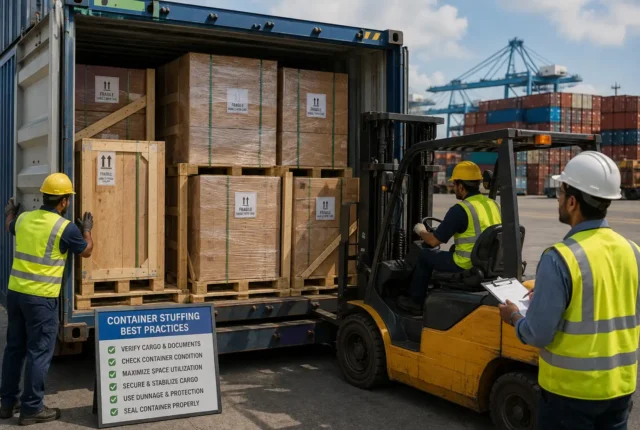
Container Stuffing Best Practices for Safe Ocean Freight
Quick Answer: Safe container stuffing means inspecting the container, planning w