

What Logistics Services Should a Growing Export Business Outsource First?
Quick Answer
A growing export business should usually consider outsourcing freight forwarding, customs clearance coordination, international transportation, and shipment documentation support first. These activities involve specialised knowledge, multiple service providers, and changing operational requirements. Outsourcing selected logistics services can help exporters reduce administrative workload, improve shipment coordination, and focus internal resources on production, sales, and business growth.
The right starting point depends on shipment frequency, cargo type, export destinations, internal capabilities, and the complexity of existing logistics operations.
Key Takeaways
- Prioritise logistics activities that require specialised expertise or create recurring operational bottlenecks.
- Freight forwarding and customs clearance coordination are practical starting points for many exporters.
- Outsource warehousing, export packing, and specialised cargo handling when internal capacity or expertise is insufficient.
- Evaluate the complete service cost, responsibilities, compliance requirements, and shipment visibility before appointing a provider.
- Retain control over customer commitments, shipment decisions, and overall logistics performance.
Introduction
As an export business grows, logistics operations become more demanding. What initially involves arranging occasional transportation can develop into a complex process involving cargo collection, export documentation, customs procedures, freight bookings, port coordination, and overseas delivery.
Managing every activity internally may become difficult as shipment volumes increase or businesses enter new markets. Employees can spend more time following up with transporters, resolving documentation issues, and tracking cargo instead of focusing on production, customer relationships, and sales.
This is where logistics services outsourcing becomes a practical option. Rather than transferring the entire supply chain to an external provider, businesses can outsource selected activities that require specialist capabilities or consume disproportionate internal resources.
The goal is to create a logistics model that supports growth without adding unnecessary operational complexity.
Which Logistics Services Should Export Businesses Outsource First?
1. Freight Forwarding and International Transportation
Freight forwarding is often a suitable starting point because international shipments involve several interconnected activities, including carrier bookings, transport arrangements, shipment documentation, and coordination between origin and destination service providers.
A freight forwarder can arrange transportation through suitable modes, such as ocean, air, road, or rail, depending on the shipment and available services.
Outsourcing this function can help exporters coordinate international movement without independently managing every carrier relationship.
When to outsource: Consider freight forwarding support when your team struggles to compare shipping options, manage recurring bookings, coordinate multiple providers, or obtain timely shipment updates.
For example, a manufacturer exporting machinery may need to coordinate factory collection, export packing, container arrangements, and international freight. A freight forwarding partner can help coordinate these activities within the agreed service scope.
2. Customs Clearance Coordination and Export Documentation
Export documentation requires accurate cargo information and an understanding of the requirements applicable to the product and destination.
Depending on the shipment, documentation may include commercial invoices, packing lists, shipping bills, certificates of origin, transport documents, and product-specific permits or certificates.
Businesses can outsource documentation support and customs clearance coordination to qualified service providers where appropriate. This can reduce the administrative burden on internal teams and help identify missing information before submission.
However, outsourcing does not automatically transfer every legal or statutory responsibility from the exporter. The parties should clearly define who prepares, verifies, submits, and approves the required documents.
When to outsource: Prioritise this activity when documentation errors, unfamiliar export requirements, or repeated customs-related queries are delaying shipments.
3. Domestic Transportation and Cargo Collection
Export logistics begins before cargo reaches a port or airport. Businesses need to move goods from factories or warehouses to designated consolidation facilities, terminals, or other handover points.
Outsourcing domestic transportation can help exporters arrange vehicles, coordinate collection schedules, and manage changing shipment volumes without maintaining their own transport fleet.
The service agreement should define pickup windows, cargo readiness requirements, loading responsibilities, delivery locations, and procedures for handling delays.
When to outsource: This is worth considering when shipment volumes fluctuate, factory pickups require frequent coordination, or internal transport management consumes substantial time.
4. Export Packing and Specialised Cargo Handling
Some export consignments require more than standard packaging. Machinery, fragile goods, oversized equipment, chemicals, and other specialised cargo may need particular packing materials, handling arrangements, or transport equipment.
Export packing services can help businesses prepare cargo for the planned journey, subject to the cargo’s characteristics and applicable requirements.
For dangerous goods, additional provisions may apply to classification, packaging, labelling, documentation, and transport acceptance. These requirements should be confirmed for the specific cargo and transport mode.
When to outsource: Consider specialist support when internal facilities or staff cannot reliably meet the packing and handling requirements of the shipment.
5. Warehousing and Third-Party Logistics
As export volumes increase, businesses may need storage, inventory handling, consolidation, or distribution support beyond their existing facilities.
Third-party logistics (3PL) providers can offer selected warehousing and logistics activities according to the agreed arrangement. Outsourcing may be particularly useful when export demand is seasonal, inventory is spread across locations, or additional warehouse capacity would otherwise require a significant fixed commitment.
Before outsourcing, define inventory ownership, stock reporting, handling procedures, order processing responsibilities, and service expectations.
When to outsource: Consider 3PL support when warehouse capacity, inventory coordination, or order fulfilment is becoming a constraint on growth.
6. Specialised Logistics for Chemicals and Bulk Liquids
Businesses exporting chemicals or bulk liquids may require logistics arrangements involving suitable containers, specialised handling, documentation, and coordination between transport providers.
Depending on the cargo and route, ISO tank logistics or other appropriate transport solutions may be relevant.
These movements require careful assessment of cargo compatibility, equipment suitability, applicable safety requirements, and carrier acceptance. Businesses should use providers with the capabilities appropriate to the shipment rather than treating specialised cargo as general freight.
When to outsource: Seek specialist logistics support when cargo handling, equipment selection, or regulatory requirements exceed your internal team’s capabilities.
Which Logistics Functions Should You Outsource First?
The following comparison can help businesses prioritise logistics outsourcing for export businesses.
| Logistics service | Consider outsourcing when | Potential operational benefit |
| Freight forwarding | International bookings and carrier coordination are becoming complex | Simplified shipment planning |
| Documentation and customs coordination | Errors or unfamiliar requirements create delays | Better document preparation and coordination |
| Domestic transportation | Pickups and delivery schedules are difficult to manage | More flexible transport arrangements |
| Export packing | Cargo requires specialised preparation | Handling aligned with shipment requirements |
| Warehousing and 3PL | Storage or inventory capacity is constrained | Access to external logistics capacity |
| Specialised cargo logistics | Cargo requires specific equipment or handling expertise | Better alignment with cargo requirements |
For many growing exporters, freight forwarding and documentation coordination are sensible first areas to assess. Other services can be outsourced as shipment volumes, cargo requirements, and operational constraints evolve.
What Should Indian Exporters Consider Before Outsourcing?
Indian exporters should evaluate logistics requirements according to their products, export destinations, shipment modes, and applicable regulations.
Before appointing a provider, consider the following:
- Documentation and compliance: Confirm applicable IEC requirements, shipping documentation, and any product-specific permissions.
- Port and carrier coordination: Establish who manages booking deadlines, cargo cut-offs, and changes to shipment schedules.
- Service coverage: Check whether the provider can support the required origin, destination, and transport mode.
- Commercial terms: Clarify freight rates, service fees, surcharges, taxes, payment terms, and potential delay-related charges.
- Responsibility allocation: Define which activities the provider performs directly and which are arranged through third parties.
Businesses should also assess the commercial and operational impact of outsourcing. External providers may reduce the need to build internal capabilities, but their services still carry costs and require effective oversight.
The decision should therefore be based on the complete operating model, not simply on whether outsourcing appears cheaper than handling a task internally.
Industry Insight: Outsource Complexity Before Losing Operational Control
From a logistics coordination perspective, we recommend identifying the activities that repeatedly create delays, require specialised knowledge, or involve multiple external parties.
For example, a business may be capable of preparing its products and commercial documents internally but lack the resources to coordinate carrier bookings, port handovers, and changing shipment schedules. Outsourcing freight forwarding may address that bottleneck without requiring the business to outsource every logistics function.
At FAK Cargo, this principle aligns with the importance of matching logistics services to actual cargo and shipment requirements. The aim should be to establish a clearly defined service scope, with responsibilities and communication procedures agreed upon before shipments begin.
Common Mistakes to Avoid When Outsourcing Logistics
- Outsourcing everything immediately: Transfer activities progressively according to business needs and internal capabilities.
- Choosing only on price: Compare service scope, exclusions, reliability, and additional charges alongside quoted rates.
- Leaving responsibilities unclear: Document ownership of paperwork, cargo handling, bookings, and exception management.
- Ignoring shipment visibility: Ensure your team receives timely updates and retains access to essential records.
- Overlooking specialised cargo requirements: Verify equipment, handling capabilities, and applicable compliance provisions.
- Failing to monitor performance: Review recurring delays, documentation issues, additional costs, and service quality.
How to Implement Logistics Outsourcing
Use this checklist when deciding which logistics services to outsource:
- Identify the activities consuming the most internal time.
- Determine which activities require external expertise or additional capacity.
- Prioritise services based on operational risk and business impact.
- Compare providers using the same shipment and service requirements.
- Confirm pricing, service scope, exclusions, liability, and documentation responsibilities.
- Establish communication channels and shipment reporting procedures.
- Review performance before expanding the outsourced scope.
Start with one clearly defined service or shipment category where possible. This allows the business to evaluate the arrangement before extending it to other logistics activities.
How FAK Cargo Can Support Growing Export Businesses
FAK Cargo provides logistics services across freight forwarding, third-party logistics, ISO tank logistics, dangerous goods and chemical cargo, export packing, port agency, and multimodal transportation.
Businesses can assess these services according to their export requirements, cargo characteristics, and operational priorities. A clearly defined logistics arrangement can help simplify coordination while allowing internal teams to focus on their core business activities.
Key Takeaway
Growing exporters do not need to outsource every logistics activity at once. Start with functions that create recurring bottlenecks or require specialist capabilities, such as freight forwarding and documentation coordination. Expand the arrangement as shipment volumes and operational requirements evolve.
If your business is reviewing its export logistics process, contact FAK Cargo to discuss your freight forwarding, cargo handling, and transportation requirements.
Frequently Asked Questions
Q1. Which logistics services should an export business outsource first?
A. Freight forwarding, customs clearance coordination, and shipment documentation support are common starting points because they involve specialised processes and multiple service providers.
Q2. What is logistics outsourcing for export businesses?
A. It involves appointing external providers to manage selected activities such as transportation, freight forwarding, documentation support, warehousing, packing, or distribution.
Q3. Does outsourcing logistics reduce export costs?
A. It can help reduce certain internal resource requirements and improve operational efficiency. However, savings depend on service fees, shipment volumes, internal costs, and the provider’s scope.
Q4. Should small exporters use a third-party logistics provider?
A. A 3PL provider may be useful when a small exporter needs additional warehousing, transportation, inventory handling, or distribution capacity without building all these capabilities internally.
Q5. How can businesses choose a reliable export logistics provider?
A. Assess service capabilities, cargo expertise, documentation support, pricing transparency, shipment visibility, communication, liability terms, and the ability to accommodate future growth.
Related posts
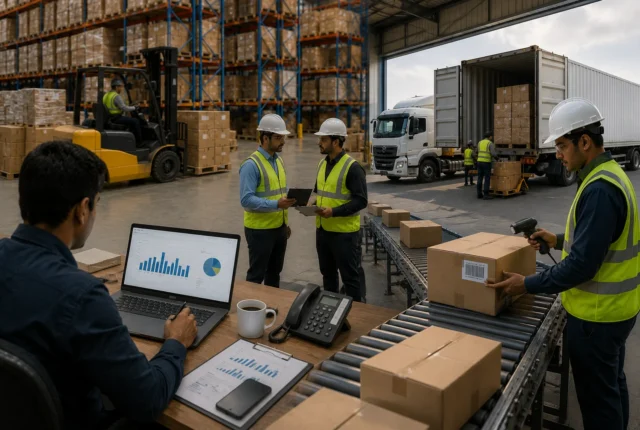
What Does a 3PL Provider Actually Do? A Complete Guide for Manufacturers
Quick Answer: A 3PL provider, or third-party logistics provider, manages selecte
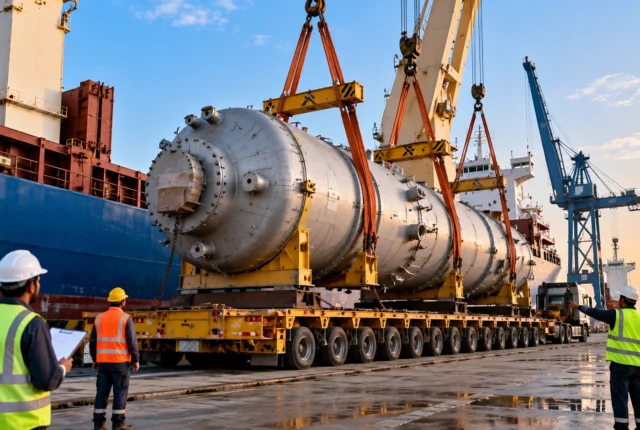
Project Cargo Logistics: How to Plan Heavy, OOG and Breakbulk Shipments from India
Learn how to plan project cargo logistics from India, including heavy and OOG ca
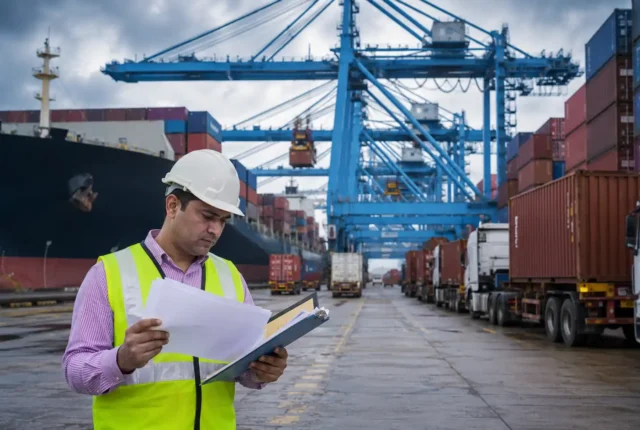
Demurrage vs Detention vs Port Storage Charges: What Indian Exporters Must Know
International shipping involves several moving parts, from factory dispatch and

Leave a Reply