
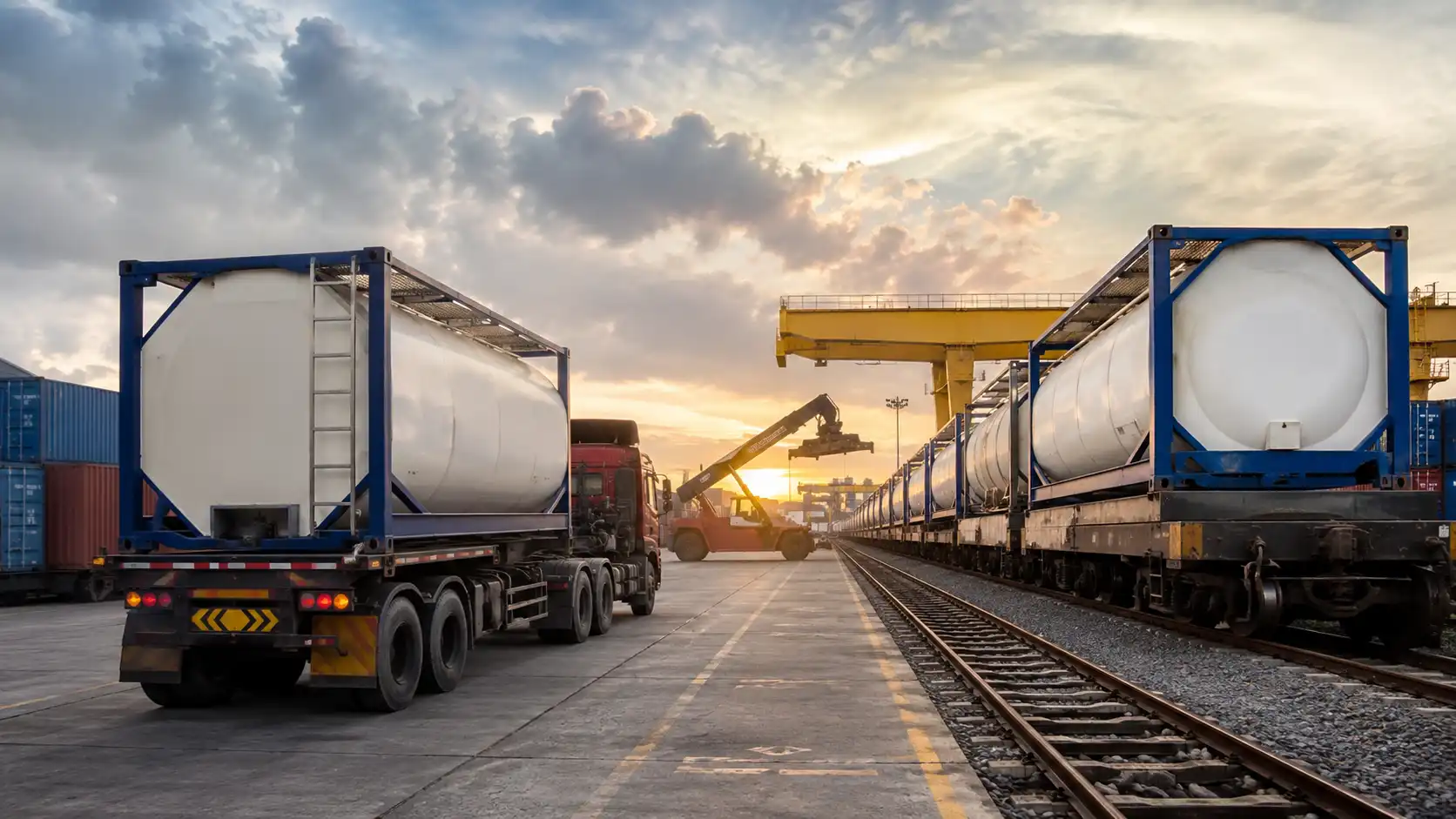
Road vs Rail for ISO Tank Movement in India: Which is Better?
Transporting liquid chemicals, food-grade products, petrochemicals, and hazardous cargo requires more than simply selecting an ISO tank. Choosing the right mode of inland transportation plays an equally important role in ensuring cargo reaches ports or customer locations safely, efficiently, and on schedule.
In India, most ISO tank movements rely on either road transport or rail transport. Both have distinct advantages depending on shipment volume, delivery timelines, destination, infrastructure, and cost considerations.
For exporters, importers, and manufacturers, understanding when to choose road over rail, or vice versa, can improve operational efficiency, reduce logistics costs, and minimise supply chain disruptions.
Quick Answer
There is no one-size-fits-all answer. Road transport offers flexibility and faster last-mile connectivity, while rail transport provides better cost efficiency for long-distance bulk movement. Many businesses achieve the best results through a multimodal approach that combines both road and rail for seamless ISO tank transportation.
Understanding ISO Tank Transportation in India
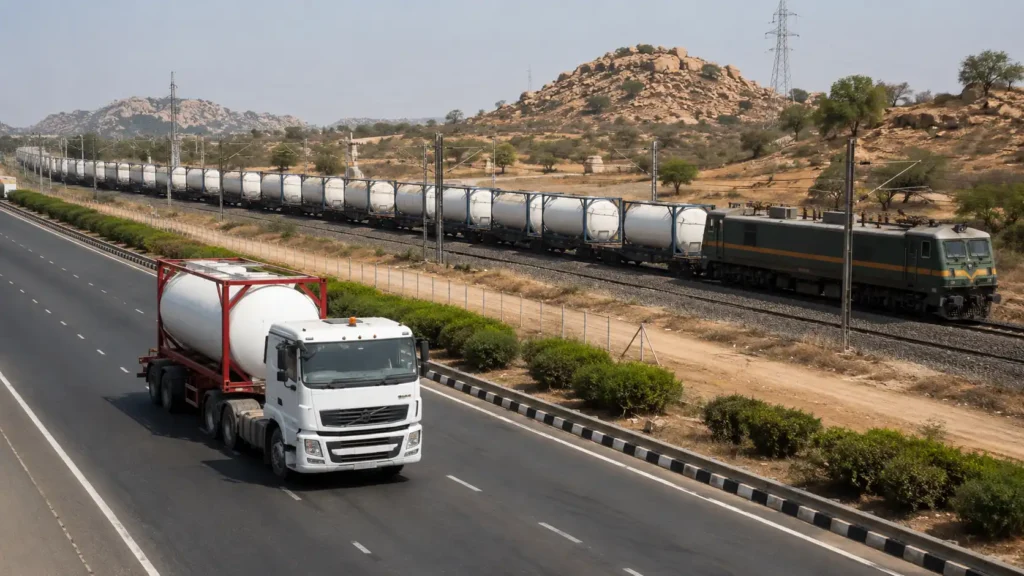
An ISO tank is an internationally standardised stainless steel container designed for transporting liquid cargo safely across road, rail, and sea without requiring cargo transfer between different containers.
Because the tank itself remains unchanged throughout the journey, cargo handling risks are significantly reduced. This also helps minimise contamination, product loss, and operational delays.
A typical journey may involve:
- Loading at the manufacturing facility
- Road transport to an Inland Container Depot (ICD) or rail terminal
- Rail movement to the destination region or port
- Final road delivery to the port or consignee
This flexibility makes ISO tanks ideal for multimodal logistics.
Road Transport for ISO Tank Movement
Road transportation remains the most widely used option for domestic ISO tank movement in India.
Advantages of Road Transport
Door-to-Door Connectivity
Road transport offers direct pickup from factories and delivery to ports, warehouses, or customer premises without requiring intermediate handling.
This makes it particularly useful for industries located away from major rail terminals.
Faster for Short Distances
For movements within the same state or neighbouring states, road transport generally offers quicker transit times than rail due to fewer loading and scheduling requirements.
Flexible Scheduling
Unlike rail services that operate on predefined schedules, trucks can often be dispatched based on production requirements and customer deadlines.
This flexibility is valuable for urgent shipments.
Easier Access to Industrial Clusters
Many chemical manufacturing plants are situated in industrial areas where dedicated rail infrastructure is unavailable.
Road transport bridges this connectivity gap efficiently.
Limitations of Road Transport
Despite its flexibility, road transport also presents certain challenges.
Higher Transportation Cost for Long Distances
Fuel expenses, toll charges, driver availability, and vehicle maintenance can significantly increase logistics costs over extended routes.
Traffic Delays
Congestion around metropolitan cities, highways, and ports can affect delivery schedules.
Unexpected weather conditions may also impact transit times.
Capacity Constraints
Each trailer carries one ISO tank, making road transport less economical for very large shipment volumes.
Rail Transport for ISO Tank Movement
India’s expanding freight rail network has made rail transport an increasingly attractive option for bulk liquid cargo.
The Dedicated Freight Corridor (DFC) has further improved reliability and transit efficiency on several major routes.
Advantages of Rail Transport
Lower Cost for Long-Distance Transport
Rail transport becomes increasingly economical as shipment distance increases.
Businesses moving multiple ISO tanks over long distances often benefit from lower transportation costs per unit.
Higher Capacity
Freight trains can transport numerous ISO tanks simultaneously, making rail suitable for high-volume movements.
Reduced Carbon Emissions
Rail transport generally produces lower greenhouse gas emissions per tonne of cargo compared to road transport.
Many companies now consider sustainability while planning logistics operations.
Better Predictability
Rail movements are less affected by highway congestion, helping businesses maintain consistent delivery schedules on established routes.
Limitations of Rail Transport
Rail transport is not always the ideal solution.
Limited Terminal Access
Factories without nearby rail terminals require road transportation before cargo can enter the rail network.
Fixed Schedules
Rail services operate according to predefined timetables, offering less flexibility than road transport.
Additional Handling
Cargo often requires movement between factory, rail terminal, and port, increasing coordination requirements.
Road vs Rail: A Comparison for ISO Tank Movement
| Factor | Road Transport | Rail Transport |
| Best For | Short to medium distances | Long-distance bulk movement |
| Flexibility | High | Moderate |
| Door-to-door delivery | Yes | No |
| Transit consistency | Moderate | High |
| Cost for long routes | Higher | Lower |
| Volume handling | Limited | Excellent |
| Environmental impact | Higher | Lower |
| Infrastructure dependency | Minimal | Requires rail terminals |
When Should You Choose Road Transport?
Road transportation is generally suitable when:
- Delivery requires direct factory pickup
- Shipment volumes are relatively small
- Delivery timelines are urgent
- Destination lacks rail connectivity
- Short-distance transportation is involved
Road transport also works well for first-mile and last-mile logistics.
When Does Rail Become the Better Option?
Rail transportation becomes advantageous when:
- Cargo travels across multiple states
- Multiple ISO tanks are shipped together
- Cost optimisation is a priority
- Sustainability goals are important
- Delivery schedules are planned well in advance
Rail is particularly beneficial for regular, high-volume industrial shipments.
Why Many Businesses Use Both Road and Rail
Rather than choosing one over the other, many exporters combine both transportation modes.
For example:
Factory → Road Transport → Rail Terminal → Freight Train → Port Terminal → Road Delivery → Customer
This multimodal approach balances flexibility, cost efficiency, and operational reliability.
An experienced ISO Tank Service provider coordinates each stage, reducing delays while maintaining cargo safety throughout the journey.
Factors to Consider Before Choosing Transportation
Every shipment has unique requirements.
Before selecting road or rail, businesses should evaluate:
- Cargo type and classification
- Hazardous or non-hazardous nature
- Delivery timeline
- Shipping distance
- Total logistics budget
- Availability of rail infrastructure
- Port connectivity
- Regulatory compliance requirements
Working with an experienced chemical logistics service provider helps businesses make informed transportation decisions based on operational needs rather than assumptions.
Why Logistics Expertise Matters
Transporting liquid cargo involves much more than moving containers from one location to another.
Proper planning includes:
- Route optimisation
- Regulatory documentation
- Equipment availability
- Safety compliance
- Port coordination
- Customs support where applicable
- Shipment tracking
A professional logistics partner ensures every stage is coordinated efficiently while reducing operational risks.
Businesses handling chemicals, edible oils, speciality liquids, or industrial products benefit from end-to-end planning that combines technical knowledge with practical execution.
How FAK Cargo Supports ISO Tank Transportation
Reliable inland transportation is a critical part of every successful export or domestic shipment.
FAK Cargo provides comprehensive ISO Tank Service solutions that support businesses across industries with safe, compliant, and efficient liquid cargo transportation.
From factory pickup and inland transportation to port coordination and documentation support, the team works to ensure cargo moves smoothly throughout the supply chain. By understanding shipment requirements, delivery timelines, and regulatory standards, FAK Cargo helps customers choose the most suitable transportation strategy for each movement.
Conclusion
Both road and rail play essential roles in India’s ISO tank logistics ecosystem. Road transport offers unmatched flexibility and last-mile connectivity, while rail delivers greater cost efficiency and sustainability for long-distance movements.
The right choice depends on shipment size, delivery timelines, infrastructure availability, and overall logistics objectives. In many cases, combining both transportation modes provides the most practical and economical solution.
By partnering with an experienced logistics provider, businesses can optimise every stage of ISO tank movement while ensuring compliance, reliability, and safe delivery across India’s growing transportation network.
Looking for a Reliable Logistics Partner for Your Global Shipments?
At FAK Cargo, we provide customised logistics solutions backed by industry expertise, reliable global networks, and a customer-first approach. From freight forwarding and multimodal transportation to export support and specialised cargo handling, our team works closely with businesses to ensure shipments move safely, efficiently, and on schedule.
Get in touch with FAK Cargo today to discuss your logistics requirements and discover solutions tailored to your business goals.
Looking for a Reliable Logistics Partner for Your Global Shipments?
At FAK Cargo, we provide customised logistics solutions backed by industry expertise, reliable global networks, and a customer-first approach. From freight forwarding and multimodal transportation to export support and specialised cargo handling, our team works closely with businesses to ensure shipments move safely, efficiently, and on schedule.
Get in touch with FAK Cargo today to discuss your logistics requirements and discover solutions tailored to your business goals.
Frequently Asked Questions
Q1. Which is better for ISO tank transportation in India, road or rail?
A. It depends on the shipment. Road transport is ideal for shorter distances and direct deliveries, while rail is generally more economical for long-distance, high-volume movements.
Q2. Is rail transport cheaper than road transport for ISO tanks?
A. For long-distance bulk shipments, rail transport often offers lower transportation costs compared to road transport.
Q3. Can an ISO tank be transported using both road and rail?
A. Yes. ISO tanks are designed for multimodal transportation, allowing seamless movement between road, rail, and sea without transferring the cargo.
Q4. What products are commonly transported in ISO tanks?
A. ISO tanks are widely used for transporting chemicals, petrochemicals, edible oils, food-grade liquids, pharmaceuticals, and other bulk liquid cargo.
Q5. Why should businesses work with a professional ISO Tank Service provider?
Related posts
How ISO Tanks are Transported from Factory to Indian Ports
Moving bulk liquid cargo safely from a manufacturing facility to an internationa
What Is DG Cargo? A 2026 Guide to Dangerous Goods Transportation
Quick Answer: DG cargo means goods classified as dangerous for transport because
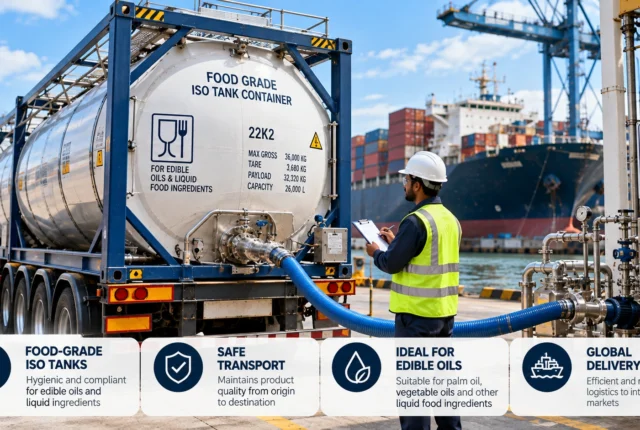
Food-Grade ISO Tank Logistics: How to Ship Edible Oils and Liquid Ingredients Safely
Learn how food-grade ISO tank logistics supports safe bulk transport of edible o