
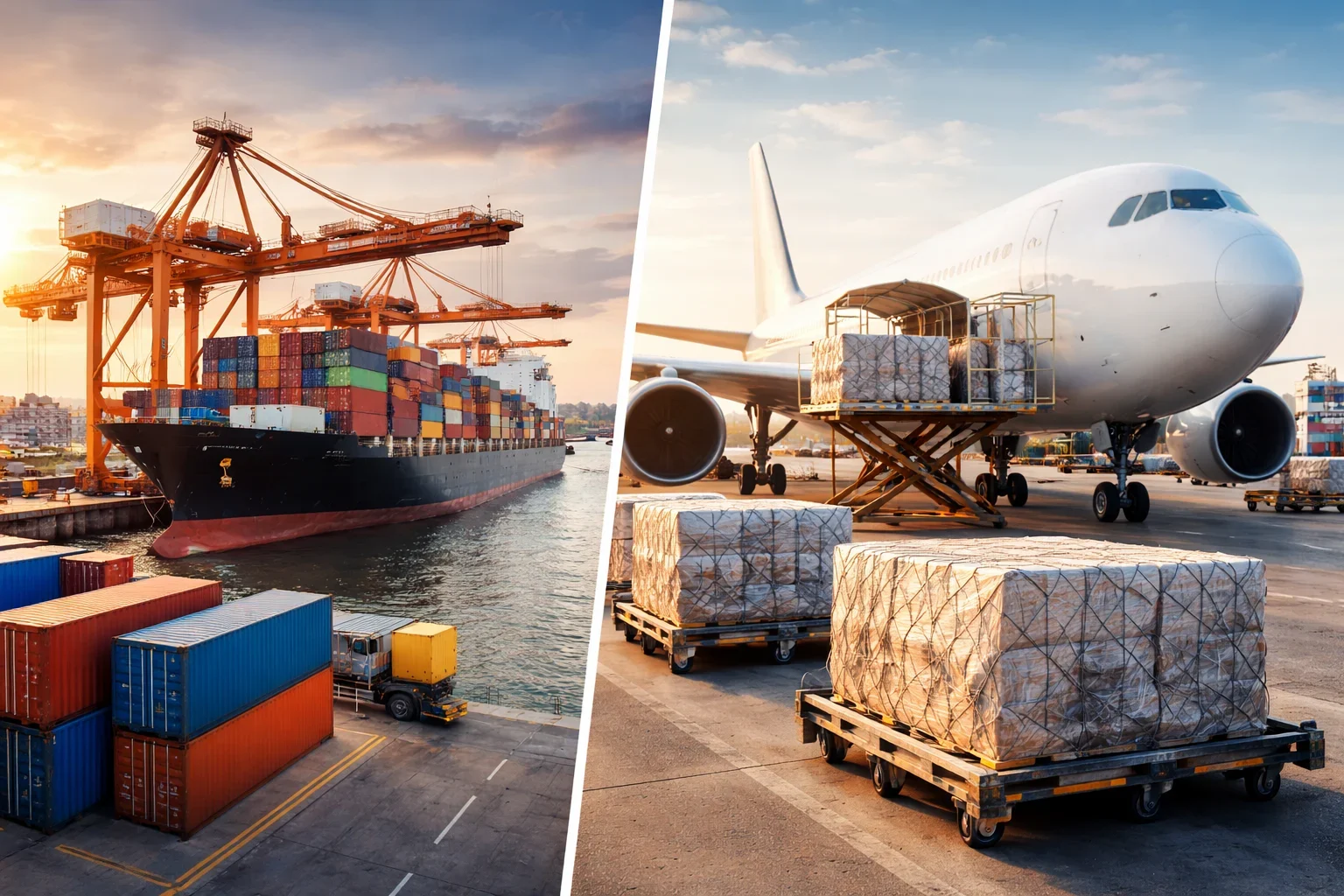
Sea Freight vs Air Freight: Which one is better for your business?
The dilemma for every export enterprise is the same: reduce shipping expenses or deliver to customers quickly. Large volume goods cost less by sea, but emergency or time-sensitive goods can only be shipped by air. The smartest exporters today, however, prefer not to rely on simple comparisons anymore and opt for logistics strategies that have the best chance of maximizing delivery timelines and profit.
Thus, follow this guide below to get an understanding of what works best for your business requirements.
Sea Freight vs Air Freight: Which is Better?
Quick Comparison:
| Factor | Sea Freight | Air freight |
| Cost | $1,500-3,000/CBM | $8,000-15,000/CBM |
| Speed | 21-35 days | 3-7 days |
| Capacity | 1,000+ CBM per container | 80-90 CBM per aircraft |
| Reliability | 95%+ (weather dependent) | 99%+ (minimal delays) |
| Damage rate | 2-3% | 0.5-1% |
| Best for | Non-urgent, large volume | Time-critical, high-value |
When to Choose Sea Freight Services
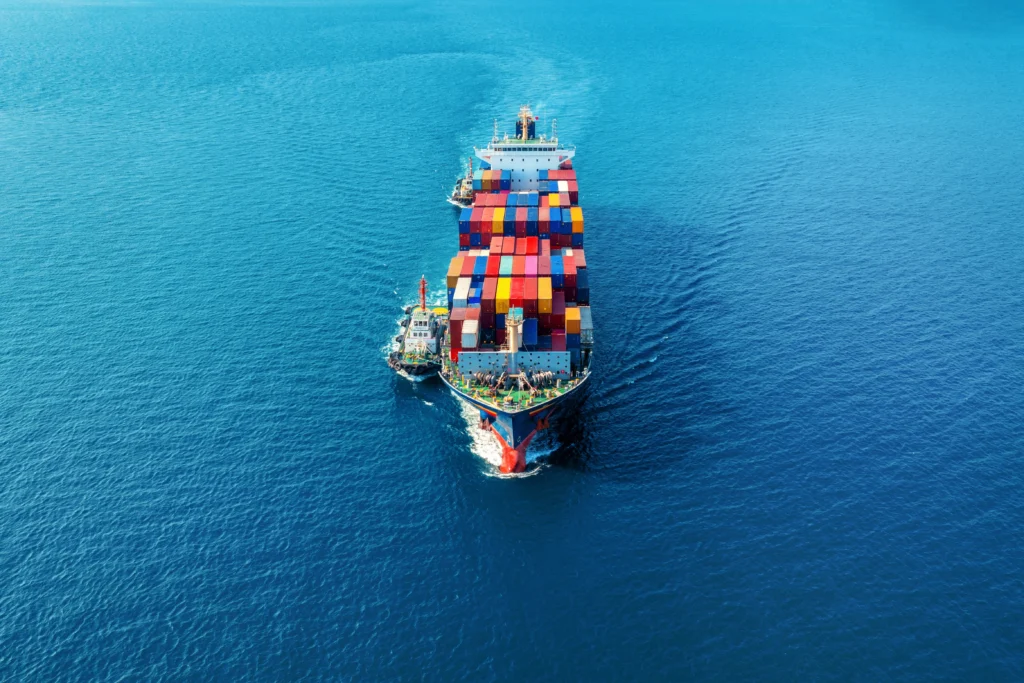
Sea freight service is usually the best value for exporters who need cost efficiency. A 20ft container holds 32 CBM at roughly ₹1.5-2 lakhs to Southeast Asia, that’s ₹5,000-6,000 per CBM.
Products appropriate for the ocean:
- Textiles and apparel
- Auto components
- Handicrafts and furniture
- Food and drink and packaged goods
- Machinery and equipment
Let’s take an example of an Indian textile exporter who exports 500 CBMs to Vietnam where he is paying around ₹25-30 lakhs by sea. In case of air shipment, the same will cost three times as much at Rs. 60-75 Lakhs. If your order is not urgent then sea freight is the obvious choice.
When Should You Use Air Freight?
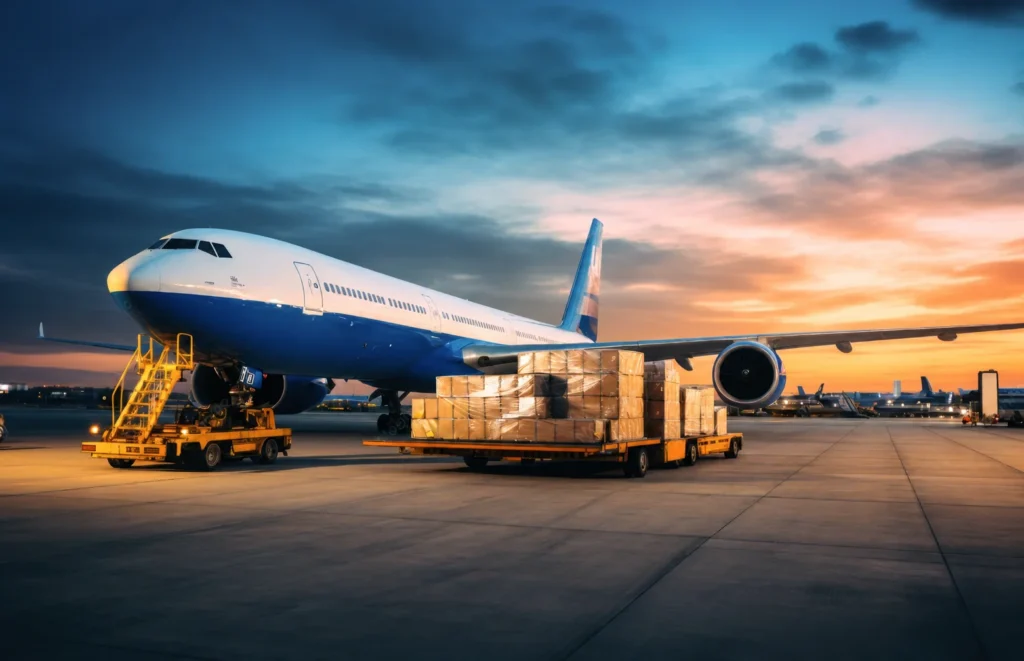
When speed matters more than cost, air freight service becomes the preferred option. Higher price is justified in instances of excessive value electronics, emergency orders, fashion and perishables.
Products appropriate for the air:
- Fruits and vegetables (2-3 days).
- Clothing, fashion and seasonal (Rush Order)
- Minimize inventory carrying expenses (high dollar electronics)
- Pharmaceuticals (Time-Critical Registration)
- Being able to find parts when they are needed during industrial failures.
For example, A pharmaceutical company is in a rush to get a shipment, and waiting for sea freight for 30 days may cause losses of lakhs per day. In such a scenario, the increased price of 3-day air freight becomes a smart investment to keep the business running, ensure timely deliveries, and keep the chain going.
The Hidden Export Costs Many Exporters Miss
The Hidden Cost of Sea Freight:
- Port handling charges (₹10,000-20,000 per container)
- This will be compensated with an extra 5-10 days for delays in documentation and customs clearance.
- In-transit inventory costs (GCST)
- Storage at destination port (₹500-1,000/day) after free days.
The Hidden Costs of Air Freight:
- Additional charges for hazardous material (15-20%)
- Dimensional weight charges, bigger items are charged more than actual weight.
- Handling and shipping fees for hazardous materials.
- Fast clearance can also increase operational costs.
The inventory holding cost is ₹2-3 lakhs per sea shipment delay for ₹30 lakhs. Not only do you not have to pay those holding costs, but you also don’t have to pay rush penalties with air freight.
Why This Matters in India
In India, ports are making rapid progress in enhancing their infrastructure but still suffer from congestion issues with a delay of 3-5 days. The 3-5 day timeframe is more predictable for time-critical exports when using air freight.
Ports like Mumbai, Port Blair and Chennai are improving their fast clearance systems and sea freight is fast emerging as a very viable means of urgent shipments.
The Multimodal Advantage
Smart exporters are no longer opting for “sea freight vs air freight”. They are employing multi modal combinations:
- Air-Sea Hybrid: Ship first volume, later volumes by sea (fast and cost-efficient).
- Rail-Sea: Having supplied from the Delhi/NCR via rail, consolidate at the port for sea freight.
- Port-to-Port-to-Air: Sea-to-regional-hub-to-air (cost vs speed)
FAK Cargo’s multimodal capabilities enable export customers to combine different modes, from air for premium/urgent goods, to sea for bulk/regular stock.
Cost-Speed Tradeoff Analysis
- Ultra time-sensitive (0-3 days): Air only (~₹12,000/CBM)
- Time-critical (3-7 days): Air (~₹10,000/CBM)
- Standard (10-15 days): Premium sea freight (~₹6,000/CBM)
- Non-urgent (21-35 days): Standard FAK consolidation (~₹3,000/CBM)
Real ROI Example
The exports of electronics to the UK were 100 CBMs.
- By Air: ₹12 lakhs 8 % faster sales = additional ₹5 lakhs revenue 5 days delivery
- By sea: ₹4 lakhs, delivery in 28 days but holding cost of inventory of ₹8lakhs
- Multimodal: 20 CBM by Air (₹2.4L premium orders) + 80 CBM by Sea (₹2.4L regular stock) = Total of ₹4.8L and balanced delivery, optimized cash flow.
Key Takeaways
The bulk exports (70% of trades) are cost sensitive and are being dominated by sea freight due to the improvement of the port infrastructure in India, and air freight is only appropriate for time critical and high valued goods (20% of trades), hidden costs can often more than compensate for the apparent savings, so calculate total landed cost and optimize speed and cost through multimodal approach.
Are you struggling to find a reliable Sea Freight or Air Freight service provider? FAK Cargo offers a dedicated worldwide freight shipping service for various industries, with your freight delivered safely and on time.
Don’t stress out, let the expert handle it.
Connect now and let us take care of the Air Freight and Sea Freight shipping requirements for your business.
Related posts

Optimizing Bulk Liquid Supply Chains: FAK Worldwide’s Data-Driven Approach
Transporting bulk liquids is among the most complex challenges in logistics. Fro
Last Mile for Industrial Cargo: Efficient Delivery in Congested Cities
The final mile is the final mile of logistics, the final tough mile, particularl
India Free Trade Agreements for Exporters: How FTAs Can Reduce Import Duties in 2026
As global trade becomes increasingly competitive, pricing plays a critical role