
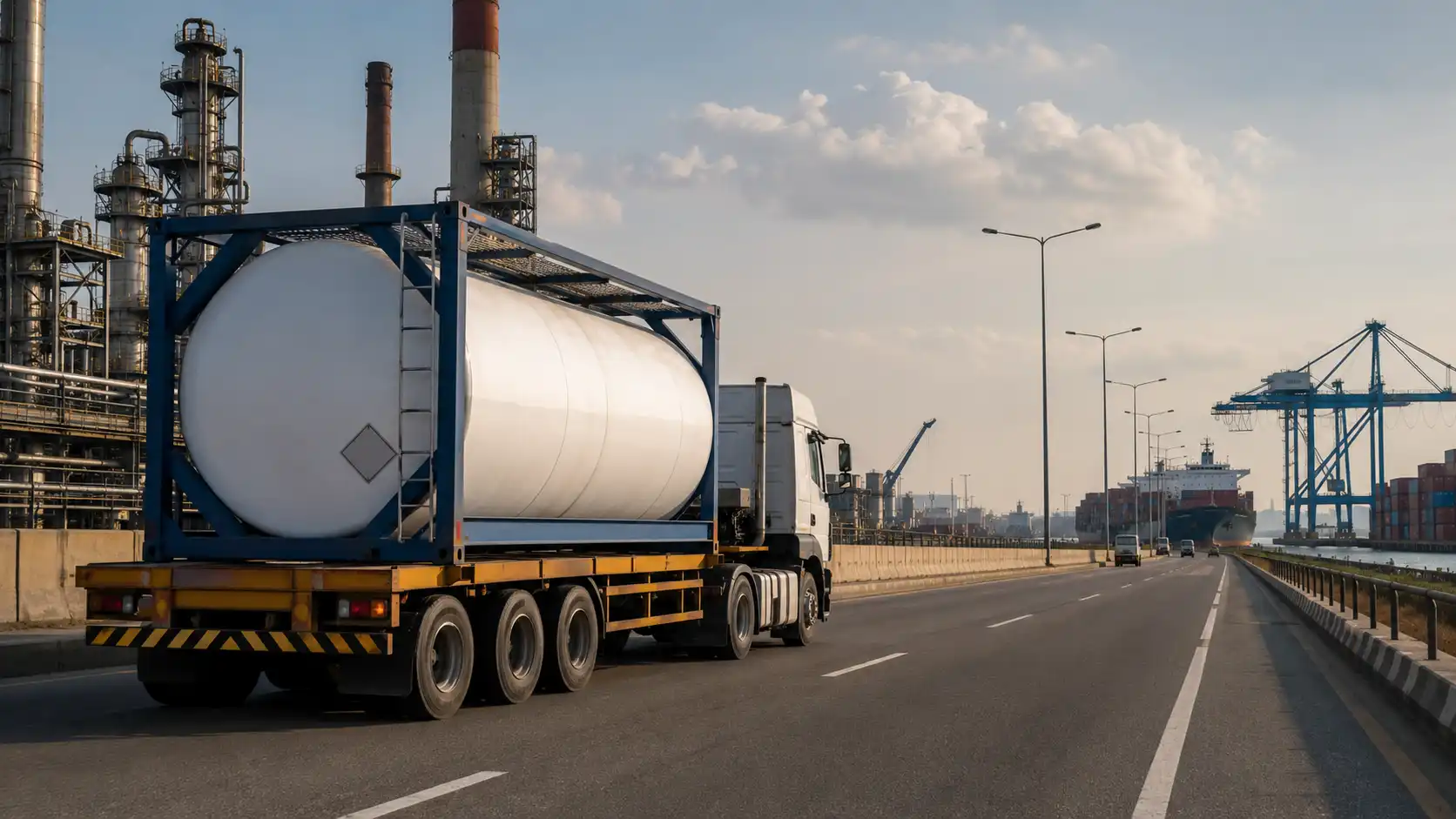
How ISO Tanks are Transported from Factory to Indian Ports
Moving bulk liquid cargo safely from a manufacturing facility to an international destination involves much more than simply loading a container onto a truck. Every shipment requires careful planning, regulatory compliance, specialised equipment, and seamless coordination between multiple stakeholders.
An ISO tank is specifically designed to transport bulk liquids safely across road, rail, and sea without transferring the cargo between containers. This reduces handling risks, improves operational efficiency, and helps preserve product quality throughout the journey.
Whether transporting industrial chemicals, food-grade liquids, petrochemicals, or speciality products, understanding how an ISO tank moves from a factory to an Indian port helps exporters make better logistics decisions and avoid unnecessary delays.
Quick Answer
An ISO tank typically travels through several stages before reaching an Indian port. These include tank allocation, inspection, loading at the factory, documentation, inland transportation by road or rail, port entry procedures, customs clearance, and finally loading onto the vessel. An experienced ISO Tank Service provider manages these stages to ensure safe and compliant transportation.
What Makes an ISO Tank Suitable for Bulk Liquid Transportation?
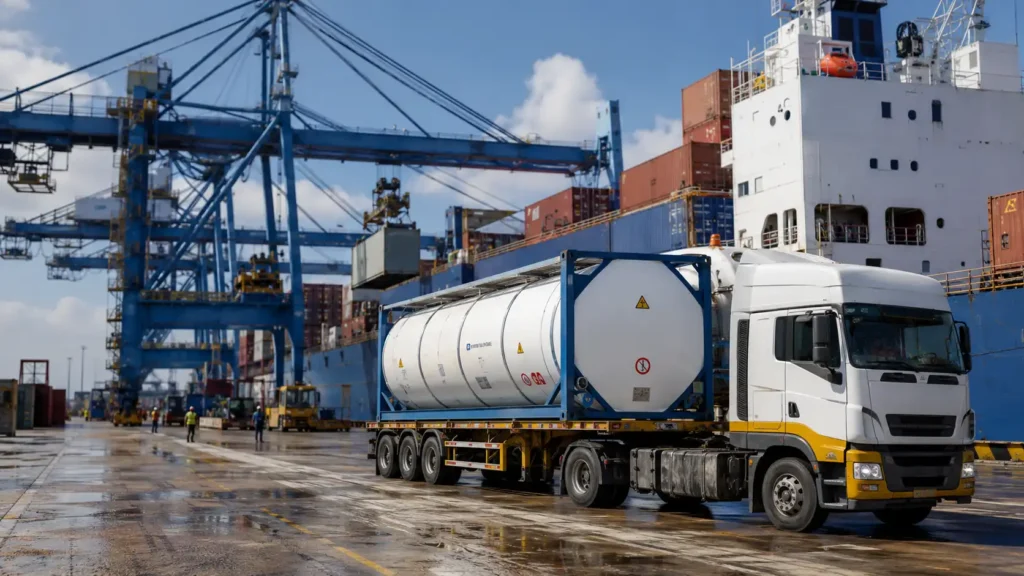
An ISO tank is an internationally standardised stainless steel tank container enclosed within a protective steel frame. It complies with ISO specifications, making it compatible with trucks, trains, and container vessels worldwide.
Unlike drums or intermediate bulk containers (IBCs), an ISO tank allows liquids to remain inside the same container throughout the entire journey. This minimises product handling, lowers contamination risks, and improves cargo safety.
Industries that commonly use ISO tanks include:
- Chemicals
- Petrochemicals
- Food and beverages
- Pharmaceuticals
- Industrial oils
- Speciality liquids
Step 1: Understanding Cargo Requirements
Every shipment begins with understanding the product being transported.
Before assigning an ISO tank, logistics teams evaluate several factors, including:
- Product type
- Hazardous or non-hazardous classification
- Temperature requirements
- Product compatibility
- Quantity being transported
- Destination country
- Applicable regulations
Selecting the appropriate tank specification is essential for maintaining cargo integrity and complying with transport regulations.
Step 2: Tank Allocation and Inspection
Once shipment requirements are confirmed, a suitable ISO tank is allocated.
Before dispatching the tank to the factory, it undergoes several inspections, such as:
- Structural condition checks
- Internal cleanliness verification
- Valve and fitting inspections
- Pressure testing records
- Safety equipment inspection
- Valid certification review
These inspections help ensure the tank is ready for safe loading.
Step 3: Positioning the ISO Tank at the Factory
After inspection, the empty ISO tank is transported to the manufacturing facility.
The logistics provider coordinates with the factory regarding:
- Loading schedule
- Vehicle access
- Safety requirements
- Loading bay availability
- Documentation readiness
Proper scheduling reduces waiting time and improves operational efficiency.
Step 4: Safe Loading of Liquid Cargo
Loading is one of the most critical stages in ISO tank transportation.
During loading, trained personnel follow established safety procedures based on the cargo being handled.
Typical loading activities include:
- Product quality verification
- Loading through designated filling points
- Monitoring filling levels
- Pressure management
- Leak inspection
- Valve sealing
- Recording cargo weight
For hazardous chemicals, additional safety protocols are followed according to applicable regulations.
Step 5: Documentation and Regulatory Compliance
Once loading is complete, shipment documentation is prepared.
Depending on the cargo and destination, documents may include:
- Commercial invoice
- Packing list
- Shipping instructions
- Material Safety Data Sheet (MSDS), where applicable
- Transport declaration
- E-way bill
- Dangerous goods documentation for regulated cargo
- Export documentation
Accurate paperwork helps avoid delays during transportation and port operations.
Step 6: Inland Transportation to the Port
After loading, the ISO tank begins its inland journey to the port.
The transportation mode depends on several factors, including:
- Distance
- Delivery timeline
- Cost considerations
- Rail connectivity
- Cargo volume
Most shipments use either:
Road Transport
Road transportation offers:
- Direct factory pickup
- Flexible scheduling
- Faster movement over shorter distances
- Easy access to industrial locations
Road transport is often preferred for first-mile connectivity and shipments where rail infrastructure is unavailable.
Rail Transport
Rail transportation is commonly selected for:
- Long-distance movements
- Bulk cargo
- Lower transportation costs
- Predictable transit schedules
- Reduced environmental impact
Many businesses combine road and rail to optimise both cost and efficiency.
Step 7: Arrival at the Indian Port
Once the ISO tank reaches the port, it enters the designated container terminal.
Before entering, several checks are completed, including:
- Gate documentation
- Security verification
- Container identification
- Weight confirmation
- Port system registration
Proper coordination between transporters and port authorities helps minimise waiting time.
Step 8: Customs and Export Clearance
Export shipments must complete customs formalities before vessel loading.
This process may involve:
- Document verification
- Customs assessment
- Regulatory approvals
- Cargo examination, if required
- Export clearance
Any documentation errors at this stage can delay vessel loading and increase logistics costs.
Experienced logistics providers help ensure compliance with customs requirements and shipping timelines.
Step 9: Port Handling and Vessel Loading
After customs clearance, the ISO tank is moved within the port terminal.
Specialised container handling equipment transfers the tank to the designated stacking area before loading it onto the scheduled vessel.
Because ISO tanks follow international dimensions, they can be handled using standard container cranes and port equipment.
Once loaded onto the ship, the tank begins its international journey without requiring the liquid cargo to be transferred into another container.
Safety Measures Followed Throughout the Journey
Transporting liquid cargo requires continuous attention to safety.
Professional logistics teams implement multiple safeguards, including:
- Certified ISO tanks
- Trained handling personnel
- Route planning
- Secure valve sealing
- Cargo compatibility verification
- Periodic equipment inspection
- Compliance with hazardous cargo regulations
- Emergency response procedures
These measures reduce operational risks and protect both cargo and personnel.
Common Challenges During ISO Tank Transportation
Although ISO tank transportation is highly efficient, certain challenges may arise.
Some common issues include:
- Documentation errors
- Traffic congestion
- Port congestion
- Weather-related delays
- Equipment availability
- Regulatory changes
- Incorrect tank selection
- Scheduling conflicts
Proper planning and proactive communication significantly reduce these risks.
Why an Experienced Chemical Logistics Service Matters
Moving liquid cargo involves coordination across manufacturers, transporters, customs authorities, shipping lines, and port operators.
An experienced chemical logistics service provider helps businesses by:
- Selecting suitable ISO tanks
- Planning transportation routes
- Managing documentation
- Coordinating port operations
- Ensuring regulatory compliance
- Monitoring shipment progress
- Reducing operational delays
Professional logistics support enables exporters to focus on production while ensuring cargo reaches the port efficiently.
How FAK Cargo Supports ISO Tank Transportation
Reliable logistics requires expertise at every stage of the supply chain.
FAK Cargo offers comprehensive ISO Tank Service solutions that support businesses from factory pickup to port delivery. With experience in handling liquid cargo across diverse industries, the team coordinates transportation planning, documentation, equipment allocation, and regulatory compliance to ensure smooth cargo movement.
Whether shipments require road transport, rail transport, or a multimodal approach, FAK Cargo works closely with customers to optimise transit efficiency while maintaining high safety standards.
By combining industry knowledge with operational expertise, FAK Cargo helps businesses transport liquid cargo confidently across India’s logistics network.
Conclusion
The journey of an ISO tank from a factory to an Indian port involves far more than transportation alone. Every stage, from tank selection and loading to documentation, inland movement, customs clearance, and vessel loading, plays an essential role in ensuring cargo reaches its destination safely and on time.
Partnering with an experienced logistics provider simplifies this complex process by improving coordination, reducing delays, and ensuring compliance throughout the supply chain. For exporters handling bulk liquid cargo, efficient ISO tank transportation forms the foundation of reliable international trade.
Looking for an expert in Chemical Logistics solutions? The Fak Cargo takes care of it all, from loading and documentation to safe delivery of tanks; we handle it expertly.
Connect now and let us take care of the chemical logistics requirements for your business.
Looking for a Reliable Logistics Partner for Your Global Shipments?
At FAK Cargo, we provide customised logistics solutions backed by industry expertise, reliable global networks, and a customer-first approach. From freight forwarding and multimodal transportation to export support and specialised cargo handling, our team works closely with businesses to ensure shipments move safely, efficiently, and on schedule.
Get in touch with FAK Cargo today to discuss your logistics requirements and discover solutions tailored to your business goals.
Frequently Asked Questions
Q1. How is an ISO tank transported from a factory to a port?
A. An ISO tank is transported through a planned process involving tank inspection, factory loading, documentation, inland transport by road or rail, customs clearance, and vessel loading at the port.
Q2. Can ISO tanks be transported by both road and rail?
A. Yes. ISO tanks are designed for multimodal transportation and can move seamlessly by road, rail, and sea without transferring the cargo.
Q3. What documents are required for ISO tank export shipments?
A. Common documents include the commercial invoice, packing list, shipping instructions, transport documents, e-way bill, export documentation, and hazardous cargo declarations where applicable.
Q4. Why are ISO tanks preferred for transporting liquid cargo?
A. ISO tanks reduce product handling, minimise contamination risks, improve safety, and enable efficient multimodal transportation.
Q5. Why should businesses choose a professional ISO Tank Service provider?
A. A professional provider manages equipment selection, transportation planning, documentation, compliance, and port coordination, ensuring smooth and reliable cargo movement.
Related posts
How to Choose the Right ISO Tank for Different Chemical Products
Quick Answer: Choosing the correct ISO tank for chemicals starts with the chemic
Road vs Rail for ISO Tank Movement in India: Which is Better?
Transporting liquid chemicals, food-grade products, petrochemicals, and hazardou
What Is DG Cargo? A 2026 Guide to Dangerous Goods Transportation
Quick Answer: DG cargo means goods classified as dangerous for transport because