

India’s New Maritime Freight Transparency Directions: What Exporters and Importers Should Know
Quick Answer
India’s Directorate General of Shipping (DG Shipping) issued Circular No. 14 of 2026 on 9 March 2026, advising shipping lines, carriers and their agents to communicate applicable charges clearly and upfront, avoid predatory pricing, and follow fair trade practices in EXIM logistics. Section 317 of the Merchant Shipping Act, 2025 provides a framework for disclosing fixed and conditional charges in transport documents, subject to a government notification specifying its application and conditions.
For exporters and importers, the development highlights the importance of transparent freight quotations, written confirmation of additional costs and better shipment-cost planning.

Key Takeaways
- DG Shipping Circular No. 14 of 2026 addresses non-transparent and opportunistic pricing in EXIM trade.
- Shipping lines, carriers and their agents have been advised to communicate applicable charges clearly and upfront.
- Section 317 provides for the disclosure of fixed and conditional charges in bills of lading or other transport documents, subject to government notification.
- Businesses should review freight quotations carefully and request written clarification of conditional charges.
- Transparent quotations can improve budgeting, shipment planning and commercial decision-making.
Why Has India Introduced New Maritime Freight Transparency Directions?
International shipping costs involve more than the basic ocean freight rate. Exporters and importers may also encounter terminal handling, documentation, equipment-related, port and other ancillary charges, depending on the shipment, carrier, contract and destination.
When these costs are not clearly communicated at the quotation stage, businesses can face unexpected expenses after confirming a shipment. Such uncertainty makes it difficult to calculate landed costs, prepare export quotations and protect profit margins.
The Directorate General of Shipping received stakeholder representations about multiple ancillary charges that were perceived as non-transparent and opportunistic. In response, it issued DGS Circular No. 14 of 2026 on 9 March 2026, advising shipping lines, carriers and their agents to adopt fair pricing practices and communicate applicable charges upfront.
The objective is to encourage greater transparency, predictability and fairness across India’s maritime EXIM logistics ecosystem.
What Do the New Directions Actually Require?
The March 2026 circular sets out three key expectations for shipping lines, carriers and their agents:
- Avoid predatory pricing: Refrain from non-transparent, opportunistic or exorbitant charges, including pricing practices that take undue advantage of geopolitical situations.
- Follow fair trade practices: Avoid imposing charges that could create disputes within the EXIM trade.
- Communicate charges upfront: Clearly communicate all applicable charges to exporters, importers and other stakeholders.
It is important to understand the legal position. The circular is an advisory. Separately, Section 317 of the Merchant Shipping Act, 2025 creates an enabling framework under which the Central Government may require service providers or agents to specify charges in a bill of lading or another transport document.
The proposed framework covers both fixed and conditional charges. It also provides for a penalty of up to ₹5 lakh for non-compliance once the provision is applicable under the relevant government notification and conditions.
As of the Government’s 17 November 2026 progress update, the draft notification under Section 317 was still being reviewed after stakeholder consultations. Businesses should therefore distinguish the existing advisory from the final operational requirements that may follow.
Which Maritime Freight Charges Should Businesses Review?
A freight quotation should explain the components that make up the total shipping cost. The exact charges depend on the carrier, route, cargo, equipment, port and agreed service scope.
| Charge category | What businesses should clarify |
| Ocean freight | Whether the quoted amount covers the agreed port-to-port movement |
| Terminal handling charges | Whether origin and destination terminal costs are included |
| Documentation charges | Costs associated with shipping instructions, bills of lading and related documents |
| Container-related charges | Applicable equipment, positioning or other container service costs |
| Security or risk-related surcharges | The reason, calculation basis and period of applicability |
| Port and local charges | Which origin or destination services are included or excluded |
| Conditional charges | Events or circumstances that may trigger additional costs |
This list is a quotation-review guide, not a statement that every charge applies to every shipment. Businesses should also distinguish carrier charges from customs duties, taxes, inland transportation and third-party service costs.
How Can Exporters Identify Hidden Charges in Shipping Quotations?
A low ocean freight rate does not always represent the lowest overall shipping cost. A quotation may exclude origin handling, destination charges or services that another provider has included.
Consider an Indian manufacturer exporting engineering components in a container. One quotation offers a lower ocean freight rate but excludes several origin and destination services. Another provider gives a higher initial rate with a clearer breakdown of the included services.
Comparing only the ocean freight figure could lead the exporter to choose the more expensive option overall.
To avoid this, businesses should:
- Request an itemised quotation rather than a single consolidated freight figure.
- Confirm which origin and destination charges are included.
- Ask for the basis of calculation, currency and applicable validity period.
- Identify conditional charges and the events that trigger them.
- Confirm whether surcharges can change after booking and under what terms.
- Obtain written approval before accepting additional charges wherever operationally possible.
A clear quotation helps procurement and finance teams compare providers on the basis of total shipment cost rather than headline freight rates.
What Is the Difference Between Fixed and Conditional Charges?
Section 317 specifically refers to both fixed and conditional charges. Understanding the distinction helps businesses evaluate freight commitments.
| Type | Meaning | Example |
| Fixed charges | Costs specified for the agreed service or shipment | A stated documentation or handling fee |
| Conditional charges | Costs that may apply when a defined event or condition occurs | A charge linked to storage beyond the permitted free time, where applicable |
A conditional charge should be explained before booking. The business should know what triggers it, how it is calculated and which party is responsible for payment.
This is particularly important when shipment schedules are affected by port congestion, vessel changes, documentation delays or other operational disruptions.
How Will Greater Freight Transparency Affect Indian Exporters and Importers?
Clearer pricing can influence several areas of supply-chain management.
Better cost estimation: Businesses can calculate export prices and landed costs using a more complete view of transportation expenses.
Improved budgeting: Finance teams can plan for foreseeable charges and identify costs that depend on operational events.
Stronger provider comparisons: Procurement teams can evaluate international sea freight services India providers on service scope, cost components and commercial terms.
Fewer disputes: Written disclosure and clarification of charges can reduce disagreements between shippers, carriers and agents.
Better shipment planning: Understanding potential cost triggers encourages businesses to manage documentation, container movement and cargo readiness more carefully.
For Indian businesses shipping through major gateways such as Nhava Sheva, Mundra, Chennai and Kolkata, the commercial value of a quotation depends on the complete service scope, not simply the ocean freight rate.
Industry Insight: Why Freight Clarity Should Begin Before Booking
At FAK Cargo, we believe freight-cost transparency should be part of shipment planning from the beginning. A quotation is useful only when the business understands what the price covers, which services are excluded and what circumstances could affect the final amount.
For exporters handling regular container movements, even a small misunderstanding about chargeable services can complicate budgeting and customer pricing. Importers face a similar challenge when estimating the landed cost of goods.
Our approach is to encourage businesses to assess the full logistics requirement, clarify service inclusions and understand possible cost variations before confirming a shipment. This supports more informed decisions across freight forwarding and multimodal transportation.
Common Mistakes Businesses Should Avoid
- Selecting a shipping provider solely on the lowest quoted ocean freight rate.
- Assuming all port, terminal and documentation charges are included.
- Accepting vague descriptions such as miscellaneous or additional charges without clarification.
- Ignoring quotation validity periods and currency fluctuations.
- Failing to document agreed charges and subsequent revisions.
- Overlooking conditional costs that may arise from delays or changes in shipment requirements.
How Should Businesses Prepare for Greater Freight Transparency?
Exporters and importers can take practical steps now:
- Standardise quotation requests: Ask all providers to quote against the same shipment details and service scope.
- Request a charge breakdown: Separate freight, origin costs, destination costs and conditional charges.
- Check exclusions: Confirm which services are not covered by the quoted amount.
- Maintain written records: Retain quotations, booking confirmations, amendments and supporting invoices.
- Review unexpected charges: Ask for the contractual or operational basis of any additional amount.
- Monitor regulatory updates: Follow DG Shipping and Ministry of Ports, Shipping and Waterways notifications for the final Section 317 framework.
How Can FAK Cargo Support Your Sea Freight Requirements?
FAK Cargo supports businesses with freight forwarding, third-party logistics and multimodal transportation requirements. A well-planned shipping movement requires more than arranging vessel space. It also involves understanding cargo requirements, coordinating logistics activities and clarifying the services included in the movement.
Businesses evaluating international sea freight services India can work with a logistics partner to review shipment requirements, understand the scope of services and plan transportation more effectively.
Conclusion
India’s maritime freight transparency initiative signals a stronger focus on fair pricing and clearer communication across EXIM logistics. While DG Shipping Circular No. 14 of 2026 is an advisory and the detailed Section 317 notification remains under development, exporters and importers do not need to wait to improve their freight-cost controls.
Request itemised quotations, clarify conditional charges and compare the complete cost of moving cargo. For support with freight forwarding and multimodal logistics planning, connect with FAK Cargo.
Frequently Asked Questions
Q1. What are India’s new maritime freight transparency directions?
A. DG Shipping Circular No. 14 of 2026 advises shipping lines, carriers and agents to avoid predatory pricing and communicate applicable EXIM transportation charges clearly and upfront.
Q2. What is Section 317 of the Merchant Shipping Act, 2025?
A. Section 317 provides a framework for requiring service providers or agents to disclose fixed and conditional charges in bills of lading or other transport documents, subject to government notification and specified conditions.
Q3. Do the new directions eliminate hidden shipping charges?
A. The advisory encourages transparent upfront communication and fair pricing. It does not mean that every additional charge has been eliminated. Businesses should continue reviewing quotations and contractual terms.
Q4. What should exporters check before accepting a sea freight quotation?
A. They should review ocean freight, origin and destination charges, documentation, terminal handling, exclusions, quotation validity and any conditional surcharges.
Q5. How can businesses compare international sea freight services in India?
A. Compare providers using the complete shipment cost, service inclusions, route and transit requirements, cargo-handling capabilities, documentation support and clarity of commercial terms.
Related Reading: Spotting Hidden Costs in Freight Quotes
Related posts
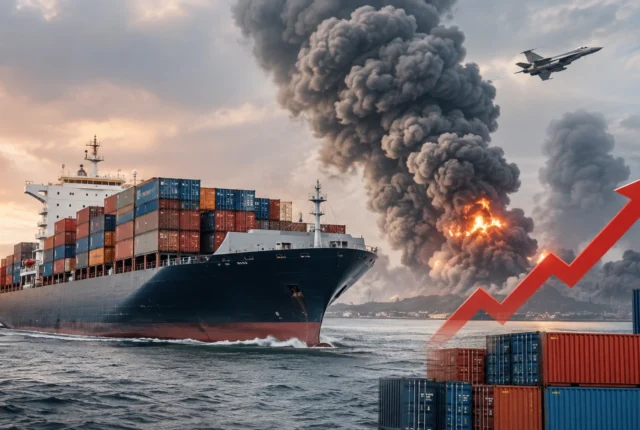
How Does a War Affect International Shipping Costs for Businesses?
Discover how war impacts freight rates, fuel costs, shipping routes and insuranc
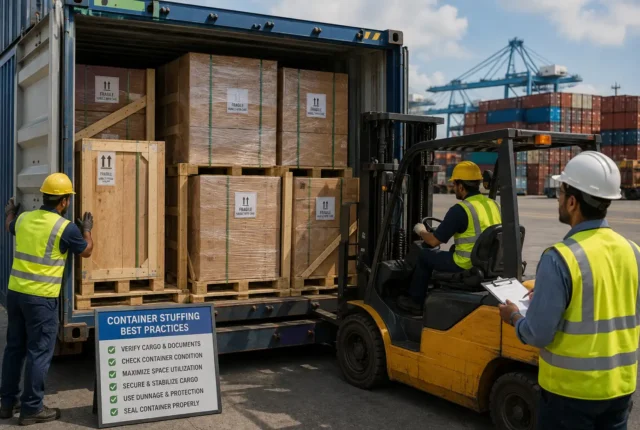
Container Stuffing Best Practices for Safe Ocean Freight
Quick Answer: Safe container stuffing means inspecting the container, planning w
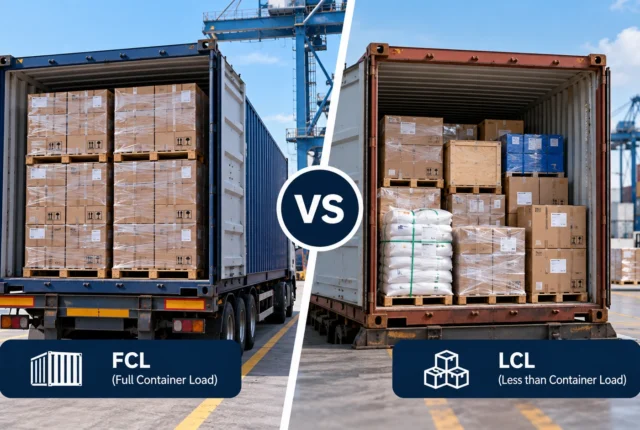
FCL vs LCL Shipping: Which Is Better for Your Export Cargo?
Compare FCL vs LCL shipping for export cargo, including costs, cargo volume, han

Leave a Reply