
India’s ₹3 Lakh RCMC Exemption: What First-Time Exporters Need to Know
Quick Answer
The Government of India has introduced an exemption from the Registration-cum-Membership Certificate (RCMC) requirement for export consignments with a Free-on-Board (FOB) value of up to ₹3 lakh. Introduced through DGFT Notification No. 36/2026-27 dated 15 September 2026, the amendment makes it easier for first-time exporters, MSMEs, artisans and small businesses to enter international markets.
Under the revised provision, exporters do not need an RCMC or Certificate of Registration for eligible consignments valued at ₹3 lakh or below, wherever the certificate would otherwise be required under the Foreign Trade Policy (FTP) 2023.
However, consignments exceeding ₹3 lakh will continue to require the relevant certificate wherever applicable. Other export requirements, including IEC, customs documentation and product-specific compliance, remain important.
Key Takeaways
- Export consignments with an FOB value of up to ₹3 lakh are exempt from the RCMC requirement wherever it would otherwise apply under the FTP.
- The exemption was introduced through DGFT Notification No. 36/2026-27 dated 15 September 2026.
- The ₹3 lakh threshold applies to individual export consignments, not annual export turnover.
- First-time exporters and MSMEs can explore international markets with fewer initial compliance requirements.
- Customs clearance, freight arrangements, export documentation and applicable product regulations still need to be addressed.
Making Export Registration Easier for Small Indian Businesses
Starting an export business in India involves several registrations, documentation requirements and operational arrangements. For first-time exporters, these initial formalities can make international trade appear complicated, particularly when testing overseas demand through small shipments.
One of the requirements under India’s Foreign Trade Policy has been obtaining a Registration-cum-Membership Certificate (RCMC) or Certificate of Registration, wherever applicable.
To reduce this initial compliance burden, the government has introduced a ₹3 lakh exemption for qualifying export consignments.
The change offers a simpler entry point for small businesses looking to explore international markets. However, understanding its scope and limitations is important before planning an export shipment.
What Is the ₹3 Lakh RCMC Exemption for Exporters?
RCMC stands for Registration-cum-Membership Certificate. It is issued by the relevant Export Promotion Council (EPC), Commodity Board or other authorised body, depending on the exporter’s products and business category.
The certificate establishes an exporter’s membership with the relevant trade promotion organisation and is required for specified authorisations, benefits or concessions under the Foreign Trade Policy.
On 15 September 2026, the Directorate General of Foreign Trade (DGFT) issued Notification No. 36/2026-27, amending Paragraph 2.57 of the Foreign Trade Policy 2023.
The amendment introduced a provision stating that an RCMC or Certificate of Registration is not required for an export consignment where the FOB value does not exceed ₹3,00,000.
The exemption aims to encourage small-value exports, particularly through postal, courier and emerging e-commerce channels.
An important distinction is that the exemption applies to individual export consignments rather than an exporter’s total annual business turnover.
Who Can Benefit from the RCMC Exemption?
The RCMC exemption for exporters is particularly relevant to businesses entering international trade or operating with smaller shipment values.
Eligible beneficiaries may include:
1. First-Time Exporters
Businesses planning their first international shipment can test overseas demand without obtaining an RCMC upfront for qualifying consignments.
2. Micro, Small and Medium Enterprises
MSMEs can explore export opportunities through smaller orders without immediately taking on this additional membership requirement.
3. Artisans and Small Manufacturers
Businesses producing handicrafts, textiles, home décor, processed goods and other eligible products can explore international buyers through smaller consignments.
4. E-Commerce Exporters
Businesses selling through cross-border digital platforms can benefit from the reduced compliance burden, particularly when fulfilling smaller international orders through postal and courier channels.
The exemption is not restricted to first-time exporters. It is based on the FOB value of the individual consignment and the applicability of the RCMC requirement under the FTP.
How Does the ₹3 Lakh Exemption Work?
The most important factor is the FOB value of the export consignment.
FOB, or Free-on-Board value, represents the value of goods at the agreed export point, excluding international freight and insurance under the applicable FOB valuation basis.
The following table explains how the exemption applies.
| Export consignment FOB value | RCMC requirement |
| ₹50,000 | Exempt, wherever otherwise required under FTP |
| ₹1 lakh | Exempt, wherever otherwise required under FTP |
| ₹2.5 lakh | Exempt, wherever otherwise required under FTP |
| ₹3 lakh | Exempt, wherever otherwise required under FTP |
| ₹3.5 lakh | Required wherever otherwise applicable |
| ₹5 lakh | Required wherever otherwise applicable |
For example, consider an Indian handicraft manufacturer shipping products worth ₹2.4 lakh FOB to an overseas customer.
Under the revised provision, the manufacturer does not need an RCMC for that qualifying consignment, even where the certificate would otherwise have been required under the FTP.
However, if the FOB value of another consignment is ₹3.8 lakh, the relevant RCMC or Certificate of Registration will continue to be necessary wherever applicable.
The exemption does not automatically remove other statutory export requirements.
Does the RCMC Exemption Mean Exporters Need No Other Registration?
No. The exemption is specifically related to the RCMC or Certificate of Registration requirement under Paragraph 2.57 of the FTP.
Exporters must continue to assess other applicable requirements.
| Requirement | Position under the exemption |
| RCMC | Not required for qualifying consignments up to ₹3 lakh, wherever otherwise applicable |
| Importer Exporter Code (IEC) | Applicable IEC requirements continue |
| GST compliance | Applicable GST requirements continue |
| Customs documentation | Still required as applicable |
| Product-specific licences | Continue wherever prescribed |
| Shipping documentation | Required according to the shipment and export channel |
| Destination-country regulations | Remain applicable |
Businesses should also check whether their product falls under restricted, prohibited or regulated export categories.
The exemption should not be interpreted as permission to bypass customs procedures, product approvals or other regulatory obligations.
What Does This Change Mean for Indian Exporters?
The amendment can make the initial stages of exporting more accessible.
Lower initial compliance burden: Small businesses can avoid obtaining an RCMC solely for qualifying low-value consignments where it would otherwise be required.
Easier international market testing: Manufacturers can explore overseas demand through smaller orders before expanding their export operations.
Greater e-commerce participation: Smaller shipments through postal, courier and other emerging channels can benefit from reduced procedural requirements.
Gradual business expansion: As export volumes increase and consignments exceed the threshold, businesses can obtain membership with the relevant Export Promotion Council or Commodity Board where required.
The measure can support a gradual transition from occasional exports to a more structured international trading operation.
Why Do Logistics and Freight Planning Still Matter?
An RCMC exemption simplifies one compliance requirement, but it does not simplify the physical movement of goods across international borders.
Exporters must still coordinate packaging, transportation, customs documentation, cargo handling and delivery.
Reliable freight forwarding services in India can help businesses manage these activities according to their shipment requirements.
Important logistics considerations include:
- Freight selection: Choosing suitable air, sea, postal or courier transportation based on shipment size, destination and delivery expectations.
- Export packaging: Protecting goods against handling damage, moisture and transportation-related risks.
- Customs documentation: Ensuring accurate commercial invoices, packing lists and other applicable shipping documents.
- Cargo classification: Identifying applicable handling and regulatory requirements, particularly for specialised or hazardous goods.
- Shipment tracking: Maintaining visibility of consignments during international transportation.
- Delivery coordination: Planning the movement of goods from the manufacturing facility to the final destination.
For businesses shipping industrial products, chemicals or specialised cargo, the applicable transportation and safety requirements must also be considered.
Industry Insight: Why First-Time Exporters Should Plan Beyond Registration
From our perspective at FAK Cargo, successful exporting depends on more than completing the necessary registrations. A shipment must be properly packed, documented, handled and transported to reach its destination reliably.
For first-time exporters, we recommend evaluating freight costs and packaging requirements before confirming overseas orders. A shipment that appears commercially attractive can become less viable when transportation, handling and destination-related expenses are overlooked.
Understanding the export process early helps businesses make better decisions about shipment size, transportation mode and delivery commitments.
Common Mistakes Exporters Should Avoid
- Confusing consignment value with annual turnover: The ₹3 lakh threshold applies to the FOB value of an individual consignment.
- Assuming all export registrations are waived: The exemption applies specifically to RCMC or Certificate of Registration requirements under the relevant FTP provision.
- Ignoring FOB valuation: Exporters should establish the correct FOB value before determining eligibility.
- Overlooking product restrictions: Restricted or regulated products may require additional permissions.
- Underestimating freight costs: International transportation and handling expenses should be calculated before confirming prices.
- Delaying RCMC registration while scaling: Businesses undertaking consignments above ₹3 lakh should obtain the relevant certificate wherever applicable.
How Should First-Time Exporters Prepare?
Before dispatching an international shipment, businesses should follow these steps:
- Confirm product eligibility: Check whether the product is permitted for export and whether additional approvals apply.
- Verify IEC requirements: Ensure the applicable Importer Exporter Code requirements are fulfilled.
- Calculate FOB value: Determine the value of the individual export consignment.
- Check RCMC applicability: Establish whether the exemption applies or whether registration is necessary.
- Prepare export documentation: Arrange invoices, packing lists and other applicable documents.
- Select a logistics partner: Evaluate freight options, packaging, customs coordination and shipment tracking.
- Review destination requirements: Check applicable product standards, labelling and import regulations.
As the business expands, exporters should also consider membership with the relevant Export Promotion Council or Commodity Board to access applicable export promotion and market development support.
How Can FAK Cargo Support Your Export Operations?
FAK Cargo provides logistics and supply-chain solutions covering freight forwarding, third-party logistics (3PL), export packing, port agency, multimodal transportation and specialised cargo handling.
For first-time and growing exporters, these capabilities can support the physical movement and coordination of international shipments.
From selecting suitable freight arrangements to coordinating export packing and cargo movement, the right logistics approach can help businesses manage their international supply chains more efficiently.
Conclusion
India’s ₹3 lakh RCMC exemption for exporters is an important step towards reducing the initial compliance burden for small businesses, MSMEs, artisans and first-time exporters.
By removing the RCMC requirement for qualifying low-value consignments, the government has created an easier starting point for exploring international markets.
However, exporters must remember that the exemption does not remove other applicable export, customs, tax or product-compliance requirements.
Businesses planning their first international shipment should evaluate documentation, FOB valuation, packaging and transportation requirements before dispatch. For assistance with freight forwarding, export packing and international cargo movement, connect with FAK Cargo to discuss suitable logistics arrangements.
Frequently Asked Questions
Q1. What is the ₹3 lakh RCMC exemption for exporters?
A. It is a DGFT provision exempting export consignments with an FOB value of up to ₹3 lakh from the RCMC or Certificate of Registration requirement, wherever otherwise applicable under the Foreign Trade Policy.
Q2. Which DGFT notification introduced the RCMC exemption?
A. The exemption was introduced through DGFT Notification No. 36/2026-27 dated 15 September 2026, amending Paragraph 2.57 of the Foreign Trade Policy 2023.
Q3. Does the ₹3 lakh limit apply to annual export turnover?
A. No. The threshold applies to the FOB value of an individual export consignment, not the exporter’s annual turnover.
Q4. Do exporters need an IEC even after the RCMC exemption?
A. Yes. Applicable Importer Exporter Code requirements continue. The RCMC exemption does not remove other statutory export requirements.
Q5. Is RCMC mandatory for export consignments above ₹3 lakh?
A. Yes, wherever RCMC or a Certificate of Registration is otherwise required under the Foreign Trade Policy. The exemption does not extend to consignments exceeding ₹3 lakh.
Related Reading: Your Next Steps as a New Exporter
Related posts
Top Documentation Mistakes That Delay IGST Refunds for Exporters
For Indian exporters, timely tax refunds play an important role in maintaining h
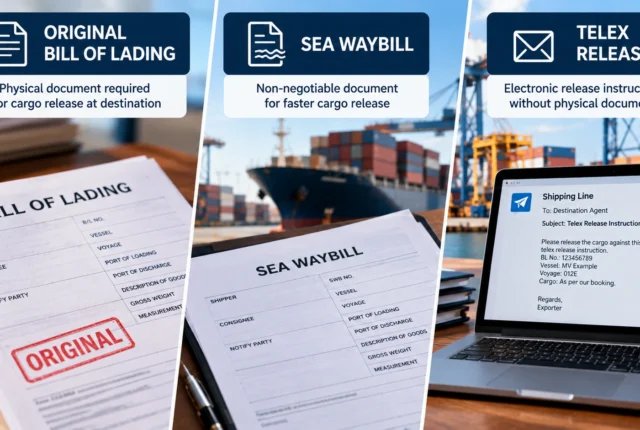
Original Bill of Lading vs Sea Waybill vs Telex Release: What Exporters Should Use
Compare Original Bill of Lading, Sea Waybill and Telex Release for exporters, in

Leave a Reply