
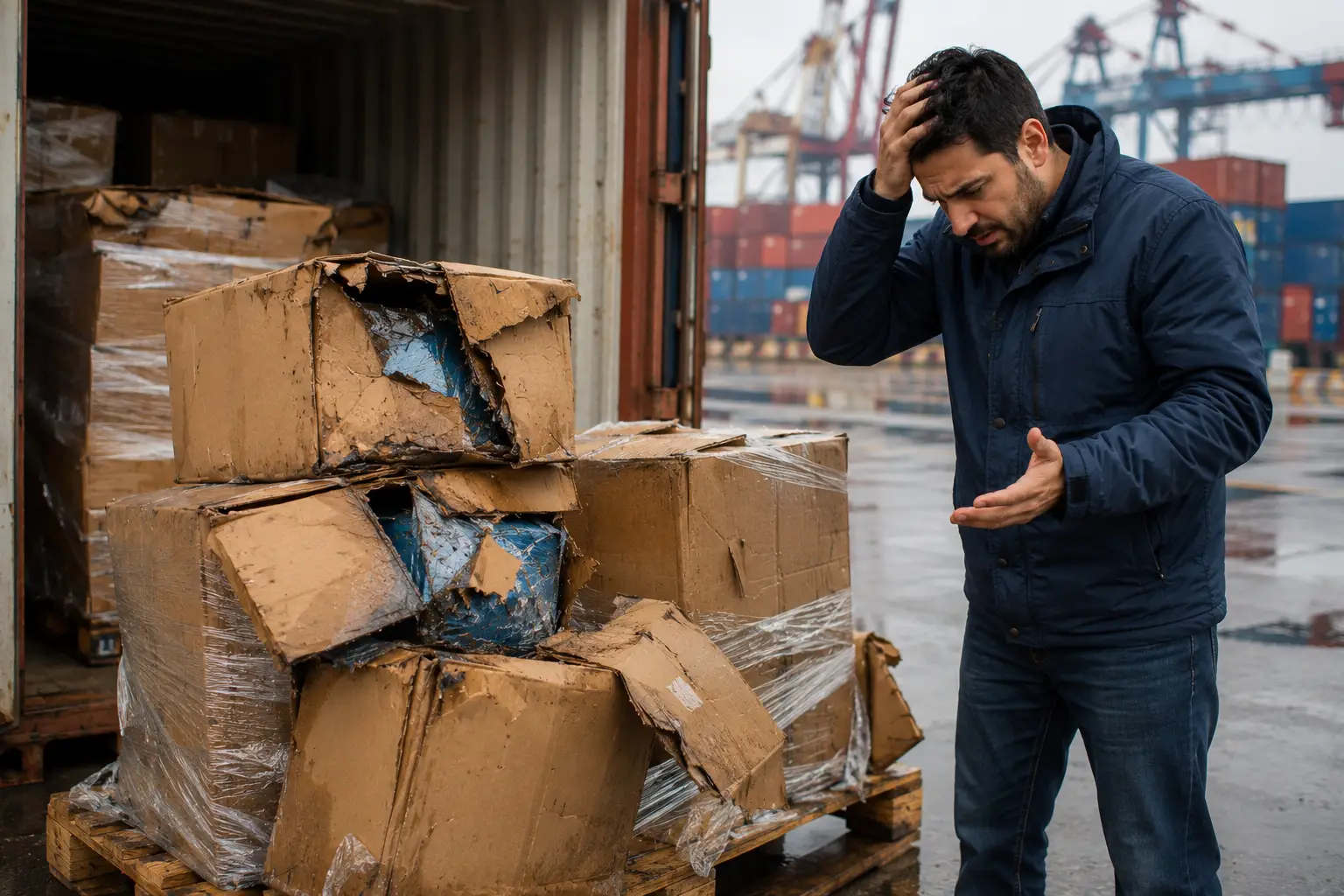
Cargo Damaged During Shipment? Here’s What to Do Next
Damage to goods can happen at any point during their journey, and can result in a significant loss for the business. Whether it’s exposure to water, rough handling, theft or environmental causes, knowing what’s causing your loss and what you can do about it is crucial for your business. Having clear accountability and quick response can greatly increase the probability of a successful claim.
To know the exact procedure of how to claim for the damages of the cargo and how to get the maximum compensation, read the guide below.
How Often Does Cargo Get Damaged?
Few situations are more frustrating than opening a container at its destination and discovering that the cargo inside has been damaged. Whether the damage is caused by water, impact, or poor handling, the next steps you take can determine whether you recover your losses.
If you have an understanding of the process, you can have the best chance of getting cargo damage claims settled.
Cargo damage can occur during transportation due to handling errors, moisture exposure, cargo shifting, environmental conditions, theft, or packaging failures.
For a ₹100 lakh shipment, 2% damage = ₹2 lakhs loss. If you don’t have the proper insurance and documentation, it’s a 100% loss.
Who’s at fault for Damaged Cargo?
This is dependent on your INCOTERMS:
| Incoterm | Responsibility |
| FOB (Free on Board) | When goods are loaded onto the vessel |
| CIF: Cost, Insurance & Freight | Risk transfers at loading, despite seller arranging freight and insurance |
| Delivered Duty Paid (DDP) | Seller responsible until delivery at destination |
| EXW (Ex Works) | Buyer assumes risk at seller’s premises |
Real scenario: Shipment FOB Mumbai. Cargo damaged during ocean transit. Buyer assumes the risk = claim is made by the buyer. However, there is a possibility YOU may still be responsible if you packed it improperly.
The responsibility for claims is based on the chosen Incoterms. Be sure to communicate this with buyers prior to delivery.
What is the most Common Cause of Cargo Damage?
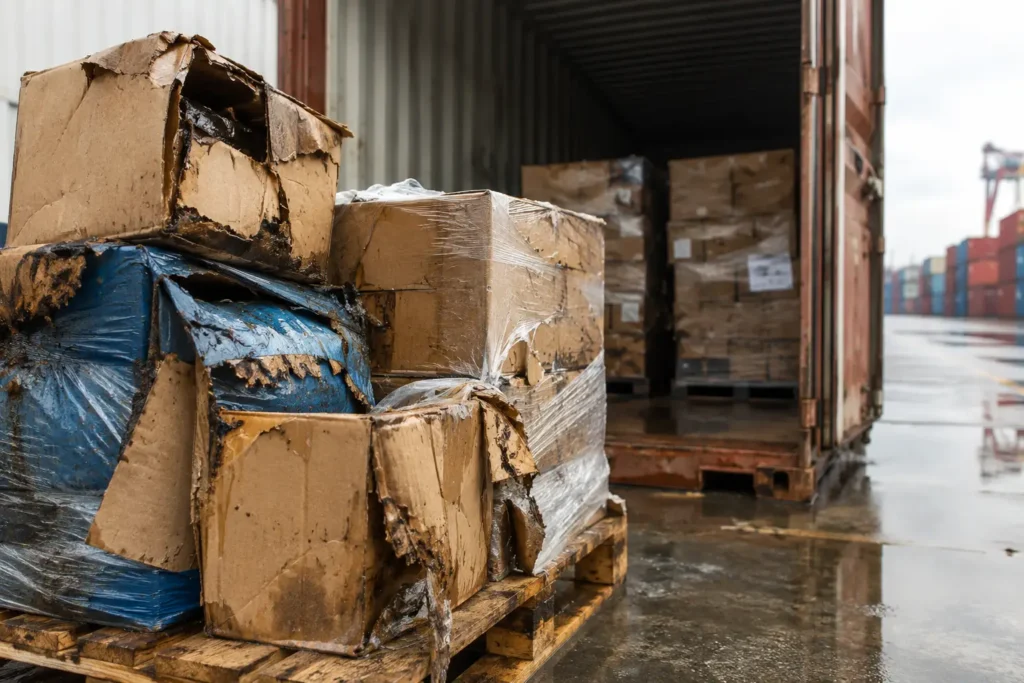
Water damage (40%):
- Container leakage (roof/walls)
- Rainwater exposure during loading or unloading operations.
- Condensation inside (due to poor ventilation)
- Water damage to the port area such as when sea water enters
Impact/crushing damage (30%):
- Not stacking or tying items properly
- Rough handling by the port workers was the cause of the damage
- Shifting of cargo during voyage
Environmental damage (15%):
- Different temperatures (if applicable)
- Moisture damage of fabrics/electronic materials
- Saltwater corrosion
Theft/pilferage (10%):
- Unauthorized access, pilferage, or cargo theft during storage and transit.
- Missing cargo upon arrival
Quality issues (5%):
- Product deterioration during transport
- Temperature-Control and Product Degradation
Step-by-Step: What to Do If Your Cargo Arrives Damaged
Step 1: Check for damage immediately after arrival
Your container will arrive and you should check it as soon as it arrives:
- Inspect container for damage – dents, leaks, visible damage, etc.
- Open and inspect products – photograph any damage
- Take photographs, videos and create a detailed description
- Record the date and time
- Have an independent surveyor (if transporting a large value cargo)
Time: Must be done within 24-48 hours after arrival. If inspection is delayed, you may lose the case.
Step 2: Inform all parties immediately
Inform:
- Your freight forwarder – (FAK Cargo if applicable)
- The shipping line/carrier
- Your supplier of cargo insurance
- Your buyer (if applicable)
Why: Carriers have very short claim notification deadlines (typically 3 days). No Claim = Not in the window.
What to communicate:
- Container information
- The date that the damage was found
- Photographs and description of damage
- Preliminary damage estimate
Step 3: Report Damage to Carrier
Formal notice must be given within 3 days to the shipping line. Include:
- Bill of Lading (BL) number
- Container number
- Details about the damage (type, extent and estimated value)
- Photos (absolutely critical)
- Inspection notes (port records)
Note: If the goods are accepted as “Accepted” or “Undamaged” you will not have the right to claim.
Step 4: Gather all the necessary documents
To make the claim, gather:
Essential:
- Original Bill of Lading (or copy)
- Commercial invoice (with the value of the goods)
- A list of items that were in the container (packing list)
- Insurance certificate
- Multiple angles of damage – close-up photos
- Report of the port/surveyor inspection
- Provide a quote for repairs or invoice for replacement (if it was replaced)
Additional (as per cargo):
- Quality certificates (if product failed because the temperature/humidity)\
- Condition report to Carrier
- Email trail of notifications
Step 5: Determine the amount of the claim
The compensation amount depends on the cause of damage, policy coverage, carrier liability, and supporting documentation.
Claim covers:
- The value of the cargo, either the invoice price or the market replacement cost of the cargo
- Freight charges (in some circumstances)
- In certain instances (insurance premium)
- Repair costs (goods can be repaired instead of replaced)
Does NOT usually pay for:
- Lag time losses in sales
- Rates for storage/demurrage (unless caused by a particular delay by carrier)
- The price of goods resold at a loss (unless agreed prior to contract)
Let’s assume that the value of any article sent for shipment is ₹50 Lakhs and it is damaged. Repairs cost ₹5 lakhs. Insurance = ₹5 lakhs (Repair cost not full value of the cargo).
Step 6: Fill out Formal Claim
Send all documents to the shipping line. Include:
- A formal claim letter (specific amount)
- All supporting documents
- Detailed damage description
- Repair estimate/replacement invoice
Typical response time: Claim review timelines vary depending on the carrier, insurer, documentation quality, and complexity of the case.
How Long Does a Cargo Damage Claim Take?
| Complexity | Timeline |
| Documented, simple and clear damage | 30-45 days |
| Debates over the cause or blame | 60-90 days |
| The insurance company had to carry out an assessment | 60-120 days |
| Legal action needed | 6-12 months+ |
Tip: If you have all the documents needed, most carriers will settle a claim in 45 days or less.
How to Prevent Cargo Damage in the First Place
- Insurance (0.5-1% for all-risks)
- Carrier selection (reliable and proven carriers)
- Route planning (using temperature-controlled containers for temperature-sensitive goods)
- Moisture protection (using silica packets and moisture barriers for goods that require moisture protection)
The Value of Cargo Insurance
- If a shipment valued at ₹50 lakhs suffers ₹5 lakhs worth of covered damage, cargo insurance may reimburse the repair or replacement cost, subject to policy terms and deductibles.
- With insurance (₹25,000 premium): You’re compensated ₹5 lakhs, net loss = ₹25,000
Insurance is a cost of 0.5-1% of cargo value, but covers for 100% loss. It’s inevitable for shipments of more than ₹10 lakhs.
Key Takeaway
Cargo damaged in shipping happens. Being prepared is all that matters: Don’t forget to keep a record of all this, notify right away, gather evidence, file by the time limit, and provide a detailed record of all this in your claim.
Looking for freight forwarding services your next order by cargo but worried about damage & claims?
FAK Worldwide assists customers with damage documentation, carrier communication, and claims support to help streamline the claims process.
Connect today and let the expert handle it all.
Related posts
How to Calculate Your Logistics Carbon Footprint Accurately
The contemporary international logistics environment is no longer characterized

Sea Freight vs Air Freight: Which one is better for your business?
The dilemma for every export enterprise is the same: reduce shipping expenses or

What Exporters Get Wrong About “Guaranteed Transit Time”
One of the most confident phrases used in the logistics is guaranteed transit ti